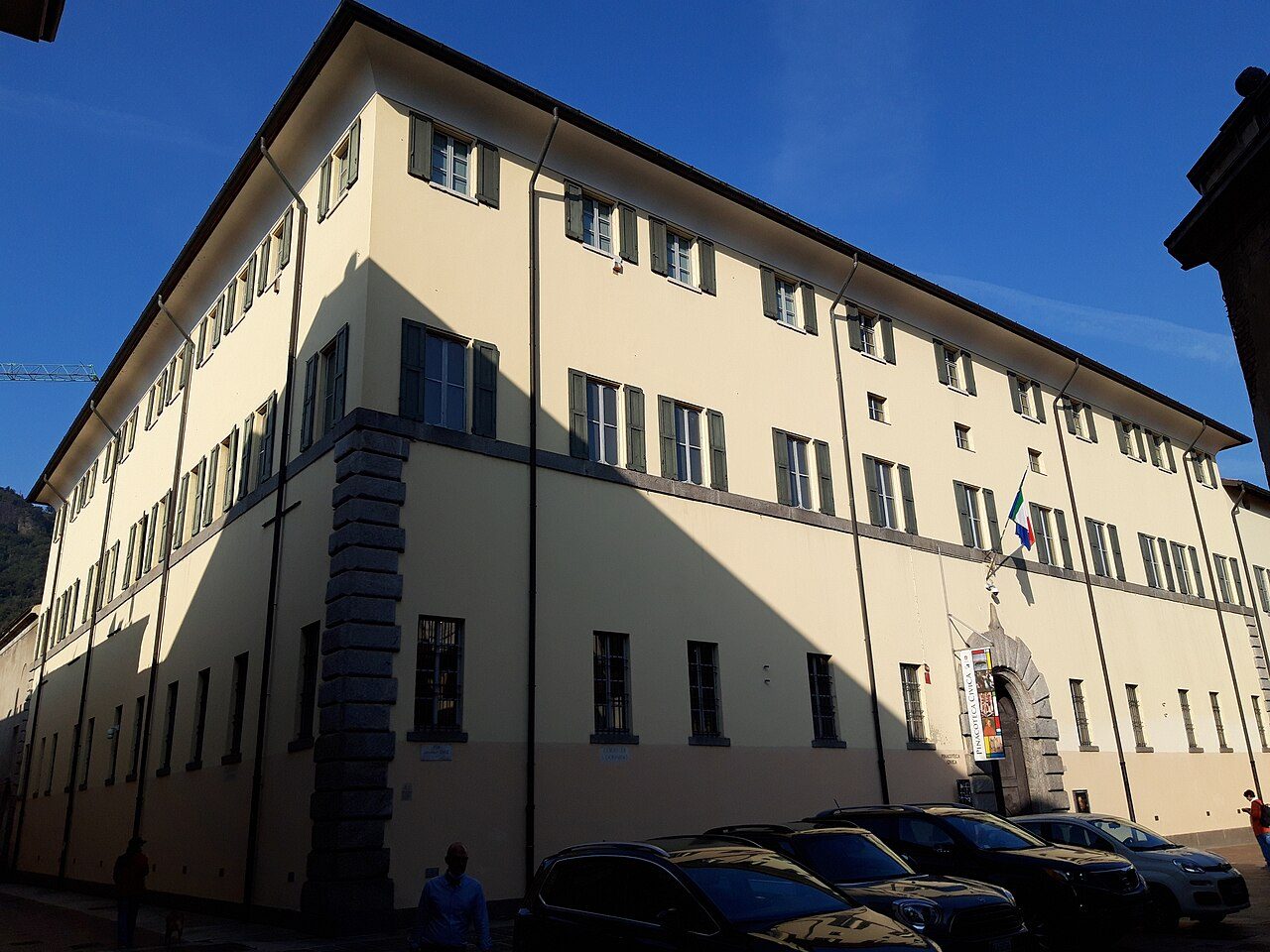
Museum · The Walled City · 1989
Pinacoteca Civica
From the Middle Ages to Futurism: Como's art in a seventeenth-century palazzo
In brief
The city's art museum, in the seventeenth-century palazzo of an archbishop. You climb floor by floor: medieval frescoes, the portraits of famous men collected by Paolo Giovio, the cities of the future drawn by Antonio Sant'Elia. Intimate, quiet, full of surprises.
Stories of this place
- Legend · The Portal and Frescoes of Santa MargheritaReadThe Sisters Who Refused to MarryIn the fourteenth-century frescoes from Santa Margherita, on the Pinacoteca's ground floor, a gentleman dies in his bed, mourned by two women. Legend says it all starts there. Liberata and Faustina, a nobleman's daughters, see the widow's anguish and decide never to marry. Their father insists they take husbands. They cross the Po River and become nuns in Como. How much is history, nobody knows: the earliest record of the sisters dates from the 1200s, seven centuries after they are said to have lived. A curious fate for someone who refused marriage: in the folk tradition of northern Italy Liberata is invoked as the protector of women in childbirth.
- Anecdote · The Virgo AdvocataReadVirgo advocata: From Unknown Nun to PosterOn the Pinacoteca's ground floor hangs a small gold-ground panel of a woman in a white veil: the Virgo advocata. It has changed labels several times. In 1905 it entered the museum as a portrait of a nun by an unknown artist. In the 1940s it was shown as Flemish, in 1953 as Spanish. Then came the name of Antonello da Messina, never unanimously accepted. In 2019 the panel went to Matera, European Capital of Culture, for a show on the Renaissance seen from the south: presented as an Antonello, it became a main image of the ad campaign. Not bad for a picture nobody could name a century earlier.
- Anecdote · The Portraits of Paolo GiovioReadThe White Elephant That Bowed to the PopeAmong the portraits collected in the 1500s by the Como humanist Paolo Giovio, one floor up in the Pinacoteca, is Tristão da Cunha, a Portuguese navigator. In March 1514 he entered Rome leading an embassy from the king of Portugal, and the gift for Pope Leo X walked in by itself: Annone, a young white elephant. It is said to have knelt three times before the pope, then with its trunk sprayed water over cardinals and crowd. It became the court's darling. When it died two years later, the pope dedicated an epitaph to it. Como's, it seems, is the only known sixteenth-century portrait of the man who brought it.
- Anecdote · The Portraits of Paolo GiovioReadThe Dinner That Gave Birth to Vasari's LivesOne floor up, the Pinacoteca holds the portraits of famous men collected in the 1500s by Paolo Giovio, a humanist and historian from Como. Rome, 1546, a dinner in the palace of Cardinal Alessandro Farnese. Among the guests are Giovio and the painter Giorgio Vasari. The talk turns to writing a history of artists. By Vasari's own account, that was the evening the undertaking passed to him, because he knew more about art than Giovio did. Four years later the Lives came out, the book where the history of Italian art begins. Giovio, meanwhile, had begun publishing the elogia, the short texts that accompanied his portraits.
- Record · The Portraits of Paolo GiovioReadMore Than 240 Portraits Copied for the MediciIn the 1500s the Como humanist Paolo Giovio gathered hundreds of portraits of famous men in a lakeside villa he called the Museo: thirty-eight are now one floor up in the Pinacoteca. It was imitated right away. In 1552, the year Giovio died, Cosimo de' Medici, duke of Florence, had the painter Cristofano dell'Altissimo copy the portraits. The painter moved to Como and reproduced more than 240, in a smaller format to travel better: they are the Giovio Series in the Uffizi. Other copies went to the Biblioteca Ambrosiana in Milan and to the Habsburg court. For many sixteenth-century figures, the face we know is the one Giovio chose.
- Legend · The Portraits of Paolo GiovioReadGiovio's Museo on Pliny's VillaThe portraits of popes, kings and commanders one floor up in the Pinacoteca come from the Museo, the villa the Como humanist Paolo Giovio built in the 1500s at Borgovico, on the lakeshore. He was sure he was building on illustrious ground. By a tradition he himself fed, the spot had once held a villa of Pliny the Younger, the Latin writer born in Como, with a plane tree he loved. Modern studies cool the enthusiasm: the ruins there more likely belonged to the villa of another Como man, the poet Caninius Rufus. What remains is the idea, pure Renaissance, of a museum rising on top of the ancient world.
- In culture · Antonio Sant'Elia and the Città NuovaReadFrom Sant'Elia's Città Nuova to Blade RunnerOn its top floor the Pinacoteca keeps the drawings of Antonio Sant'Elia, the Futurist architect born in Como who in 1914 imagined a Città Nuova, a New City. They never became a city, but they have a lot to do with the movies. The towers and suspended streets of Metropolis, the film shot in the 1920s by the director Fritz Lang, are often compared to these drawings. The same is said, more than fifty years later, of the gloomy Los Angeles of Ridley Scott's Blade Runner. Look at those pencil sheets and you find a world of images you already know, even if you have never heard their author's name.
- Anecdote · Antonio Sant'Elia and the Città NuovaReadBuried in the Cemetery He Had DesignedOn the top floor the Pinacoteca keeps the drawings of Antonio Sant'Elia, the Futurist architect born in Como. His last project was not a city of the future. In 1916 he was an infantry second lieutenant on the Carso, the plateau behind Trieste, and his commander gave him an architect's job: the brigade's war cemetery at Monfalcone. On October 10, during an assault, he was killed by a machine-gun bullet. They buried him there, in the cemetery he had designed. Five years later his remains were brought to Como. The man who imagined stations for airplanes left as his last work his own first grave.
- Anecdote · Antonio Sant'Elia and the Città NuovaReadThe Lighthouse Tower That Became a MemorialComo's Monumento ai Caduti, the war memorial on the lakefront, was not designed for the fallen. It grew out of a pencil, pastel and watercolor sketch by Antonio Sant'Elia, the Como Futurist architect whose drawings are on the Pinacoteca's top floor. He made it before the war: a lighthouse tower. In 1930 Filippo Tommaso Marinetti, the founder of Futurism, proposed building that drawing instead of the design already in hand. The painter Enrico Prampolini turned it into architecture and the brothers Attilio and Giuseppe Terragni built it. It opened in 1933: Sant'Elia, killed in the war in 1916, got his only large building, one of the fallen among the fallen.
- Anecdote · Abstract Painters and Rationalists: Como's 1900sReadThe Abstract Painter Who Forged PapersAmong the Como abstract painters on the Pinacoteca's top floor hang the geometries of Carla Badiali, painter and textile designer. In wartime that precise hand served another purpose. Badiali set painting aside and forged identity papers, to hide wanted anti-Fascists and Jews and get them abroad. Late in the war she was arrested and locked up in San Vittore, Milan's prison. She was soon out: some tell of an escape, others of a release. After the Liberation she returned to textiles, designing fabrics for Paris fashion houses such as Givenchy and Balmain. The same hand, first for those who had to disappear, then for those who wanted to be noticed.
Ready-made questions
After the man who had it built: Volpiano Volpi, also known as Ulpiano, a Como native who became an archbishop and a trusted man of the popes in Rome. In the early decades of the seventeenth century he wanted a grand town palace for his family and entrusted the design, according to the most widely accepted attribution, to the Sienese architect Sergio Venturi. The family lived in it for a long time. Then the palazzo passed to the state, which made it a courthouse, and finally to the city, which restored it and turned it into a museum.
Go to stop: Palazzo Volpi and the CourtyardNobody knows, and it is only honest to say so. The museum presents it as attributed to Antonello, following the art historian Ferdinando Bologna, who considered it an early work by the Sicilian painter. Other scholars assign it to Jacomart, a painter from Valencia active in Naples at the Aragonese court, and to his collaborator Pere Joan Reixach. Everyone agrees on the date, the middle of the fifteenth century, and on the setting: that Mediterranean world between Spain and southern Italy where Flemish painting was the model to imitate.
Go to stop: The Virgo AdvocataThey are the portraits of famous men collected in the sixteenth century by Paolo Giovio, a humanist and bishop from Como. He put together more than four hundred and displayed them in his villa on the lake, which he called the Museo. Likeness mattered to him more than beauty: he wanted the true face of the leading figures of history, ancient and modern, friends and enemies. At his death the collection was divided among his heirs and largely scattered. The Pinacoteca holds thirty-eight original paintings, the main group that survives.
Go to stop: The Portraits of Paolo GiovioBecause Como, like many cities, lost part of its religious heritage in two waves. Between the end of the eighteenth century and the age of Napoleon, many convents were suppressed and their property scattered. Later, other churches were pulled down or transformed. The paintings, marbles and frescoes that could be saved passed to the city. That is one reason the Pinacoteca exists: the in the great hall, the frescoes of Santa Margherita and the of San Giorgio are all survivors of buildings that have vanished or changed.
Very little. For certain a villa in Brunate, above Como, built around 1912, and a few tombs. He died in the war at twenty-eight, in 1916, before he could build even one of the structures of his Città Nuova. His fame rests entirely on the drawings, and the archive kept by the Pinacoteca numbers more than one hundred and seventy. The largest building tied to his name is posthumous: Como's Monumento ai Caduti, the war memorial, derived in the 1930s from one of his sketches.
Go to stop: Antonio Sant'Elia and the Città NuovaBecause of a lucky meeting between painters and architects. In the 1930s Giuseppe Terragni, the best-known Italian architect, was working in Como, and around him a group of artists formed who shared the same taste for geometry and pared-down forms. Mario Radice, Manlio Rho, Carla Badiali and Aldo Galli moved to abstract painting when almost nobody in Italy practiced it. The trade mattered too: in a silk city, designing patterns for fabrics was a job, and some of them did it.
Go to stop: Abstract Painters and Rationalists: Como's 1900sFour things, one for each stretch of the route. On the ground floor, the frescoes of Santa Margherita, with the saints' journey, and the small Virgo advocata. One floor up, the rooms of Paolo Giovio's portraits. On the top floor, the drawings of Antonio Sant'Elia. If you have to narrow it down further, keep the Virgo advocata and Sant'Elia: they are the two works that resemble nothing you will see elsewhere on the lake, and a few minutes in front of each is enough to take them with you.
The stops
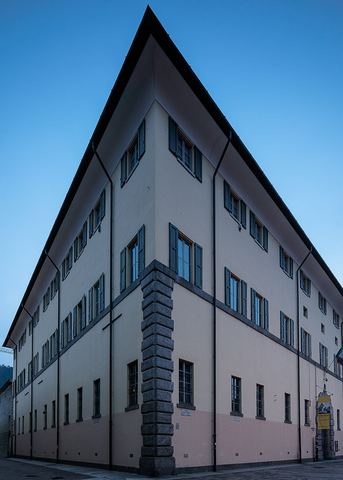
1 Palazzo Volpi and the Courtyard
Before it was a museum, this was an archbishop's family palace and then, for more than a century, a courthouse with its own prison. It dates from the seventeenth century and feels more Roman than Lombard.
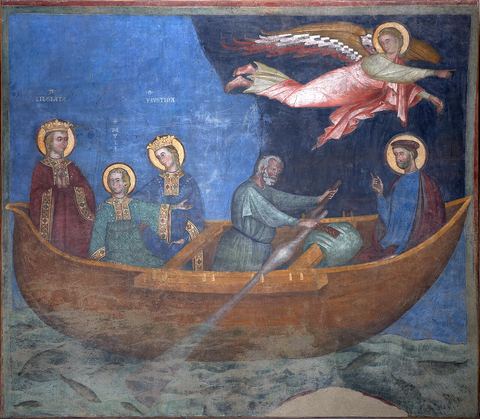
2 The Portal and Frescoes of Santa Margherita
Five fourteenth-century scenes tell of the journey of Saints Liberata and Faustina to Como. They are a story in episodes, detached from the walls of a monastery that no longer exists. The museum grew up around them.
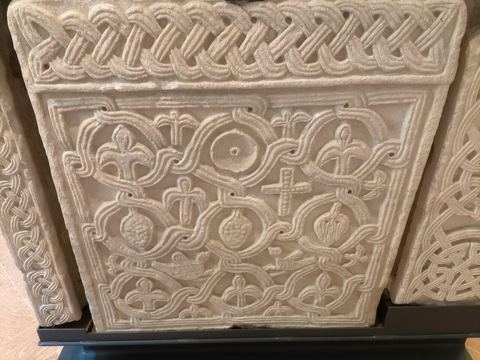
3 Marbles, Apses and a Piece of the Broletto
Gathered here are pieces of Como's medieval churches: carved marbles, capitals, and the frescoes of San Giorgio in Borgovico, remounted in the shape of the apses they came from. There is also a fragment of the painted Broletto.
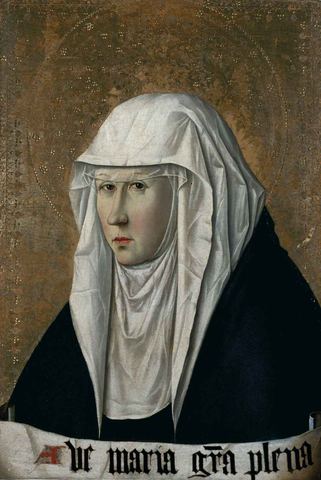
4 The Virgo Advocata
A panel just over half a meter tall and a century of arguments. It entered the museum as a portrait of a nun by an unknown artist. Today it is presented as attributed to Antonello da Messina, but many scholars think of a painter from Valencia.
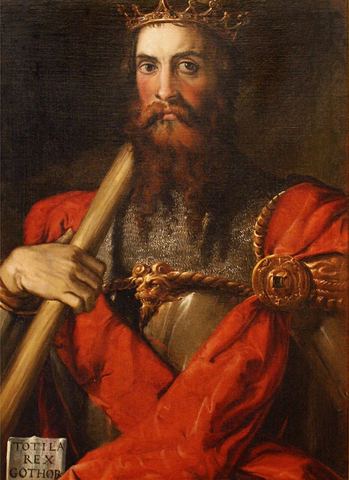
5 The Portraits of Paolo Giovio
In the sixteenth century the Como humanist Paolo Giovio collected more than four hundred portraits of famous men and showed them in a lakeside villa he called the Museo. The villa is gone. Thirty-eight originals remain here: the largest surviving group.
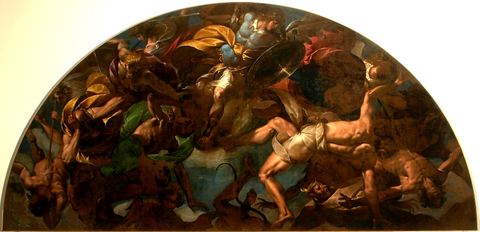
6 The Salone d'Onore and the Angel Lunettes
Two canvases seven meters wide, painted for a powerful family's chapel in a church that no longer exists. They tell of the same battle in heaven: the archangel Michael against the rebel angels. Around them, the quadreria of the suppressed churches.
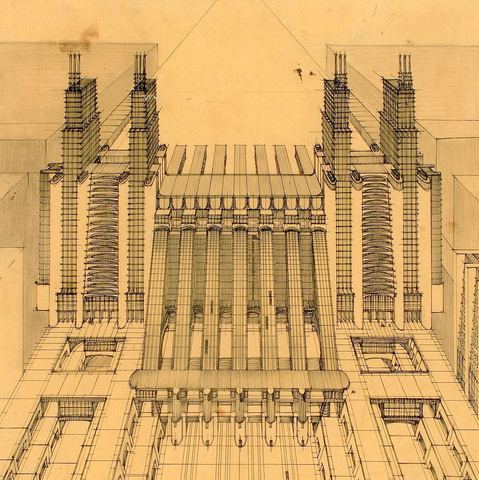
7 Antonio Sant'Elia and the Città Nuova
A Como man killed in the war at twenty-eight, who built almost nothing and drew the city of the future. Stations for trains and airplanes, multilevel streets, elevators everywhere: sheets in pencil and ink that bring to mind a lot of the science-fiction cinema that came later.
8 Abstract Painters and Rationalists: Como's 1900s
In the 1930s Como was a small capital of modern art: Rationalist architects and abstract painters worked side by side. Here you find paintings, designs, furniture and one awkward piece: the never-installed decoration for the Casa del Fascio.
Timeline
- 1317The bodies of Saints Liberata and Faustina are carried to the Duomo. Soon after, the frescoes of the Santa Margherita monastery are painted.
- 1543At Borgovico, on the lake, Paolo Giovio completes the villa he calls the Museo: it will hold more than four hundred portraits.
- 1608–1610Morazzone paints the Fall of the Rebel Angels for the Gallio chapel in San Giovanni in Pedemonte.
- 1629Volpiano Volpi, the Como-born archbishop who wanted the palazzo for his family, dies in Rome. It now houses the museum.
- 1839The state buys the palazzo and makes it the courthouse. The prison and the Corte d'Assise will rise over the garden.
- 1914Antonio Sant'Elia shows the Città Nuova drawings in Milan and signs the Manifesto of Futurist Architecture.
- 1968The Corte d'Assise leaves Palazzo Volpi. In the 1970s the city buys it and begins a long restoration.
- 1989The first section of the Pinacoteca opens, with the Santa Margherita frescoes and the medieval marbles.
Who's who
Volpiano Volpi
archbishop, patron of the palazzo
Born in Como, he lived mostly in Rome in the service of the popes. He wanted the palazzo that bears his name for his family and died in 1629.
Paolo Giovio
Como humanist, physician, bishop and historian
He collected more than four hundred portraits of famous men and displayed them in a lakeside villa he called the Museo. He died in 1552.
Morazzone
Lombard painter of the early seventeenth century
Nickname of Pier Francesco Mazzucchelli. For the Gallio family he painted the great lunette of the Fall of the Rebel Angels, now in the Salone d'Onore.
Antonio Sant'Elia
Futurist architect, born in Como
He drew the Città Nuova and signed the Manifesto of Futurist Architecture. He died in the war in 1916, at twenty-eight. The museum keeps his archive.
Mario Radice
painter, a founder of the Como abstract group
He worked alongside the Rationalist architects. He painted the abstract walls of Terragni's Casa del Fascio: the museum keeps the studies for them.
Carla Badiali
abstract painter and textile designer
She turned to abstraction with Manlio Rho's encouragement. An anti-Fascist, she forged papers for Jews and the persecuted during the war and was jailed.
Words to know
Where it is
The neighborhood
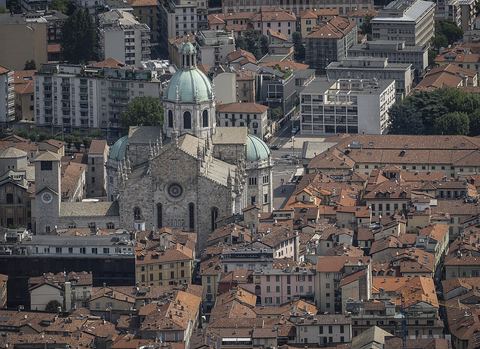
The Walled City
Related places
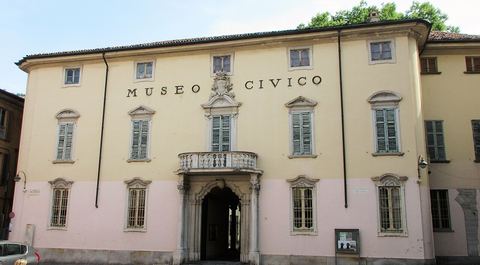
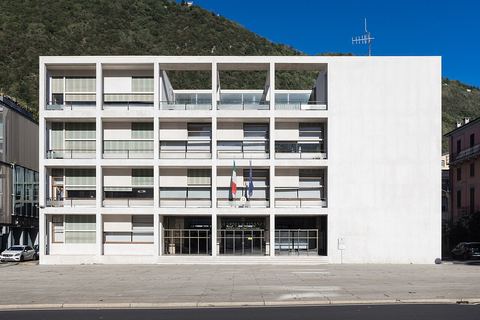
The story of the place
Como has taken itself apart more than once: convents closed down, churches pulled down, villas demolished. Much of what was saved ended up here. The Pinacoteca Civica, the municipal picture gallery, is first and foremost the city's memory: frescoes lifted off walls, marbles removed from churches, altarpieces left without an altar.
An archbishop's palazzo
The container is Palazzo Volpi. It was commissioned in the early decades of the seventeenth century by Volpiano Volpi, a Como native who had made his career in Rome as an archbishop and a trusted man of the popes. He rarely came back to Como, but he wanted a grand town palace for his family.
The design is attributed to Sergio Venturi, an architect from Siena, and it has a sober, solemn air, more Roman than Lombard. Volpi died in Rome in 1629.
From courthouse to museum
The palazzo remained a noble residence for two centuries. In the nineteenth century the state bought it and turned it into the courthouse: the garden vanished under the prison and the Corte d'Assise, the court for the most serious crimes. Trials were held here until 1968. Then the city bought the building and restored it without hurrying, stripping away the nineteenth-century additions.
The museum opened in 1989 with a single section: the fourteenth-century frescoes from the monastery of Santa Margherita and a collection of medieval marbles. The rest came later, one piece at a time, from the other municipal museums, from donations and from purchases.
The route, floor by floor
Today the route climbs with the centuries. On the ground floor you find the Middle Ages and the Renaissance. One floor up is the , the gallery of old paintings, with the huge canvases from vanished churches, and the portraits collected in the sixteenth century by Paolo Giovio, the Como humanist who gave the word museum the meaning we still use.
On the top floor is the twentieth century, which in Como is serious business: the drawings of Antonio Sant'Elia, the of Giuseppe Terragni, the abstract painters of the Gruppo Como.
Don't expect a parade of famous names. Expect a city telling its story through what it has lost, and three or four works that are worth the visit all by themselves.
Sources
- Pinacoteca civica, Palazzo Volpi: pieghevole del museo con storia e sezioni, Comune di Como (opens in a new tab)Official site
- Pinacoteca Civica, portale del Comune di Como (opens in a new tab)Official site
- Madonna, Virgo advocata: scheda dell'opera, Lombardia Beni Culturali (opens in a new tab)Catalog
- Caduta degli angeli ribelli del Morazzone: scheda dell'opera, Lombardia Beni Culturali (opens in a new tab)Catalog
- San Michele arcangelo trionfante su Satana di Carlo Francesco Nuvolone: scheda dell'opera, Lombardia Beni Culturali (opens in a new tab)Catalog
- Ritratto di Nicolò Leoniceno di Dosso Dossi: scheda dell'opera, Lombardia Beni Culturali (opens in a new tab)Catalog
- Ritratto di Tristano da Acugna: scheda dell'opera, Lombardia Beni Culturali (opens in a new tab)Catalog
- Ritratto di Halì Turco: scheda dell'opera, Lombardia Beni Culturali (opens in a new tab)Catalog
- Ritratto di Totila di Francesco Salviati: scheda dell'opera, Lombardia Beni Culturali (opens in a new tab)Catalog
- Stazione d'aeroplani e treni ferroviari di Antonio Sant'Elia: scheda dell'opera, Lombardia Beni Culturali (opens in a new tab)Catalog
- Storie delle sante Liberata e Faustina, affreschi da Santa Margherita: scheda, Catalogo generale dei beni culturali (opens in a new tab)Catalog
- Madonna in trono con Bambino, affresco dal Broletto: scheda, Catalogo generale dei beni culturali (opens in a new tab)Catalog
- Decorazione per la facciata della Casa del Fascio di Marcello Nizzoli, Pinacoteca civica di Como su Google Arts & Culture (opens in a new tab)Institution
- Madonna, Virgo Advocata: scheda dell'opera, Pinacoteca civica di Como su Google Arts & Culture (opens in a new tab)Institution
- San Michele arcangelo sconfigge gli angeli ribelli del Morazzone, Pinacoteca civica di Como su Google Arts & Culture (opens in a new tab)Institution
- San Michele arcangelo trionfante di Carlo Francesco Nuvolone, Pinacoteca civica di Como su Google Arts & Culture (opens in a new tab)Institution
- Ritratto di Totila di Francesco Salviati, Pinacoteca civica di Como su Google Arts & Culture (opens in a new tab)Institution
- La collezione dei ritratti di Paolo Giovio, racconto della Pinacoteca civica di Como su Google Arts & Culture (opens in a new tab)Institution
- Collezione Sant'Elia, racconto della Pinacoteca civica di Como su Google Arts & Culture (opens in a new tab)Institution
- Monumento con lanterne di Antonio Sant'Elia, Pinacoteca civica di Como su Google Arts & Culture (opens in a new tab)Institution
- Il Musaeum di Paolo Giovio, Finestre sull'Arte (opens in a new tab)Other source
- La mostra su Paolo Giovio e la sua collezione di ritratti alla Pinacoteca Civica, Finestre sull'Arte (opens in a new tab)Other source
- L'opera Virgo advocata torna in Pinacoteca a Como, Espansione TV (opens in a new tab)Other source
- The Como Group of Artists, Astrattisti Comaschi, Como Companion (opens in a new tab)Other source
- Sant'Elia, Antonio, Dizionario Biografico degli Italiani, Treccani (opens in a new tab)Encyclopedia
- Sante Liberata e Faustina, vergini: scheda per la memoria del 19 gennaio, Diocesi di Piacenza-Bobbio (opens in a new tab)Institution
- Primo Maestro di Santa Margherita, Il viaggio delle sante Liberata e Faustina, Christian Iconography (opens in a new tab)Other source
- Carla Badiali, Una donna al giorno (opens in a new tab)Other source
- Antonio Sant'Elia e il cimitero della brigata Arezzo di Monfalcone, Italia Nostra, sezione di Gorizia (opens in a new tab)Institution
- Annone l'elefante e Ulisse il rinoceronte: Roma all'epoca di Leone X, Guide Aurea Roma (opens in a new tab)Other source
- Hanno, the white elephant Manuel I sent to the Pope: Rome, 12 March 1514, Lisboeta (opens in a new tab)Other source
- Carla Badiali, scheda dell'artista, M77 Gallery (opens in a new tab)Other source
- Geometria e poesia si incontrano in mostra: il fascino dell'astrattismo di Carla Badiali, CiaoComo (opens in a new tab)Other source
- Lauro Mattalucci, Indagine aperta sul culto di Santa Liberata (opens in a new tab)Other source
- Santa Faustina di Como, Santi e Beati (opens in a new tab)Other source
- Pinacoteca di palazzo Volpi, Wikipedia in italiano (opens in a new tab)Wikipedia
- Pinacoteca Civica di Palazzo Volpi, Como, Wikipedia in inglese (opens in a new tab)Wikipedia
- Museo di Giovio a Borgovico, Wikipedia in italiano (opens in a new tab)Wikipedia
- Antonio Sant'Elia, Wikipedia in italiano (opens in a new tab)Wikipedia
- Ulpiano Volpi, Wikipedia in italiano (opens in a new tab)Wikipedia
- Monumento ai caduti (Como), Wikipedia in italiano (opens in a new tab)Wikipedia
- Ico Parisi, Wikipedia in italiano (opens in a new tab)Wikipedia
- Ritratto di Vespasiano Gonzaga, Wikipedia in italiano (opens in a new tab)Wikipedia
- Virgo Advocata, Wikipedia in italiano (opens in a new tab)Wikipedia
- Basilica di San Giorgio (Como), Wikipedia in italiano (opens in a new tab)Wikipedia
- Serie Gioviana, Wikipedia in italiano (opens in a new tab)Wikipedia
- Annone (elefante), Wikipedia in italiano (opens in a new tab)Wikipedia
- Hanno (elefante), Wikipedia in portoghese (opens in a new tab)Wikipedia
- Hanno (elephant), Wikipedia in inglese (opens in a new tab)Wikipedia
- Carla Badiali, Wikipedia in italiano (opens in a new tab)Wikipedia
- Liberata di Como, Wikipedia in italiano (opens in a new tab)Wikipedia
- Pinacoteca Civica, nodo 6423743236 su OpenStreetMap: verifica delle coordinate (opens in a new tab)Other source