Stop 3 of 8
Marbles, Apses and a Piece of the Broletto
Where to stand
In the rooms of the medieval section, on the ground floor, among the sculptures and the reconstructed frescoed apses
Gathered here are pieces of Como's medieval churches: carved marbles, capitals, and the frescoes of San Giorgio in Borgovico, remounted in the shape of the they came from. There is also a fragment of the painted Broletto.
Spot the detail
In the enthroned Madonna from the Broletto: what is the Child holding in his left hand?
The full story
There is no masterpiece to hunt for in these rooms. There is a way of looking: every piece is a fragment of a building, and the game is to put it back in place in your head.
The carved stones
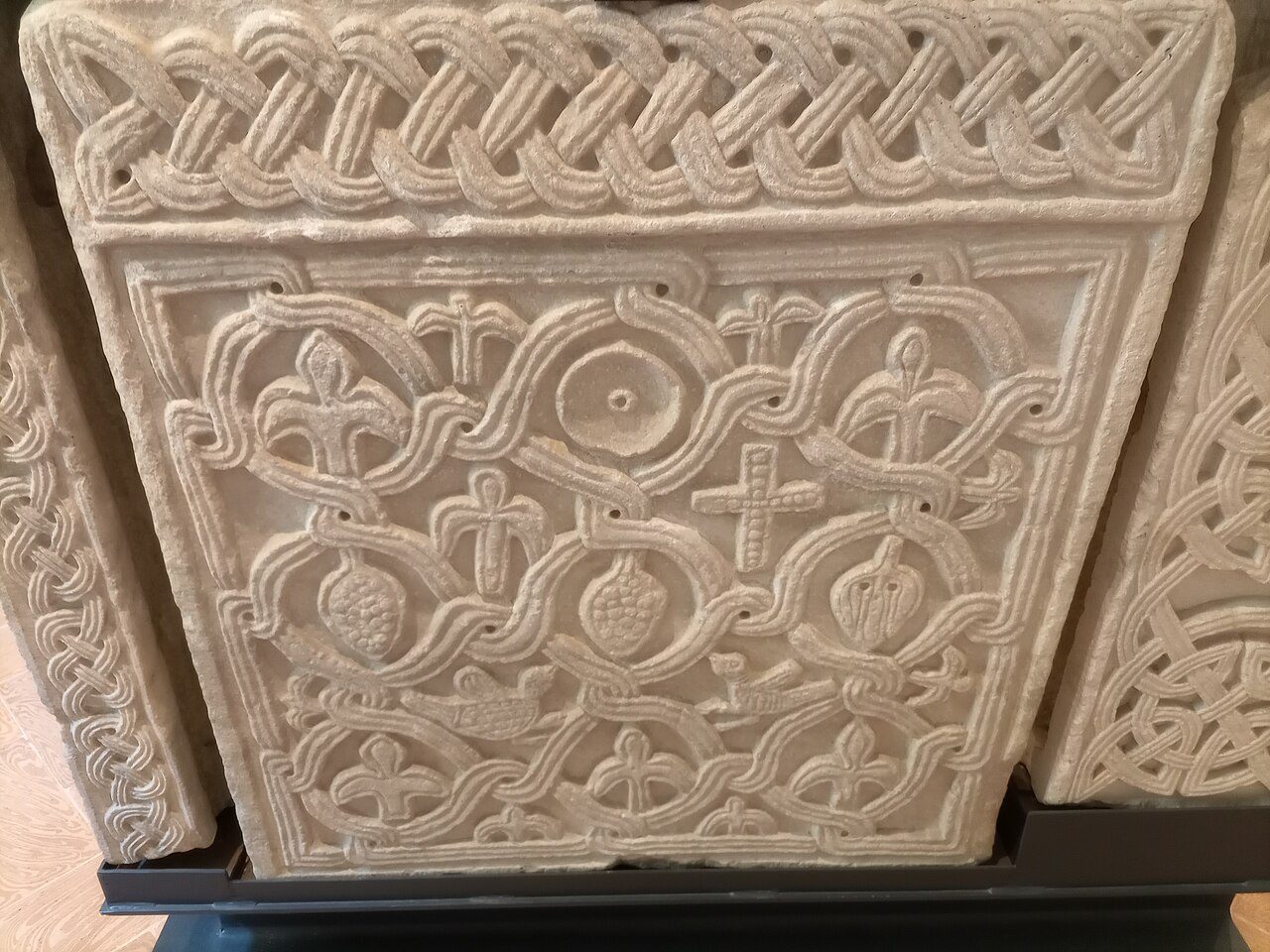
Start with the stones. The oldest date from the end of the sixth century, the most recent from the fourteenth: eight centuries of chisel work. There are marbles of the Carolingian age from the basilica of Sant'Abbondio, carved for the liturgical furnishings, meaning everything that surrounded the altar in a church.
From the same basilica comes a group of Romanesque stuccoes. And then corbels and capitals, Romanesque and Gothic, that once carried the arches and vaults of buildings now vanished or transformed.
If you go to Sant'Abbondio, remember these rooms: the architecture is there, and what was taken out of it is here.
The apses of San Giorgio
Then look for the . They come from San Giorgio in Borgovico, a Romanesque church in the suburb that stretches along the lakeshore. The frescoes were in the 1960s.
Since 2003 they have been remounted here on a structure that reproduces the shape of the medieval church: the central , hollowed into five deep niches, and the side apses. It is the most theatrical piece in the section, because it gives back what a museum usually loses: space.
You are not looking at a picture on a wall. You are standing at the far end of a church, with the painting wrapping around you.
The frescoes from the Broletto
The last surprise is civic, not religious. Some frescoes come from the great hall of the Broletto, the medieval town hall next to the Duomo, Como's cathedral: an enthroned Madonna and Child, a frieze with coats of arms and a scene with a young man and Death. They date from the early fourteenth century and are attributed to the same painter as the Santa Margherita stories, with help from his workshop. At the end of the nineteenth century the city had them taken off the walls by a restorer from Bergamo, Giuseppe Steffanoni, to bring them into the museum.
The Broletto is still in its place, next to the Duomo. A piece of its painted walls, though, is here.
Next stop
Move on to the Renaissance rooms, still on the ground floor, and look for a small panel with a gold ground