Stop 1 of 8
Palazzo Volpi and the Courtyard
Where to stand
In the inner courtyard of the palazzo, looking at the facades around it
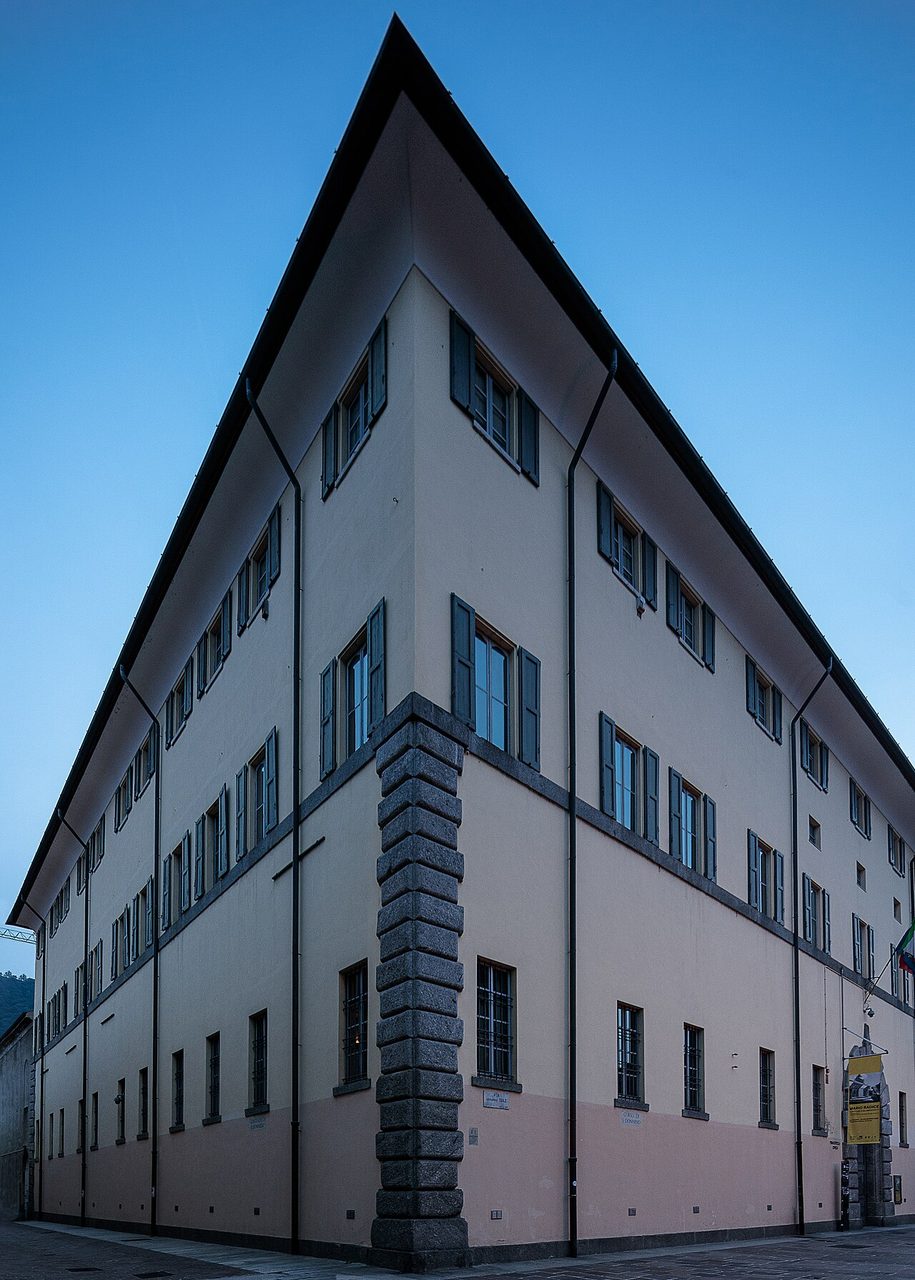
Before it was a museum, this was an archbishop's family palace and then, for more than a century, a courthouse with its own prison. It dates from the seventeenth century and feels more Roman than Lombard.
Spot the detail
The palazzo once had a large garden, now gone: try to guess which side it opened on
The full story
Look around before you head into the galleries. This courtyard was not made for a museum. It was made for a man who was almost never in Como.
Volpiano Volpi was born in Como, but he made his career far from the lake. He was archbishop of Chieti, then bishop of Novara, but he lived mostly in Rome, in the service of the popes, who also sent him on a mission to the king of Spain. He was rarely seen in his own dioceses.
The museum introduces him with a quotation: a learned bishop, full of knowledge. When he decided to give his family a palace worthy of his rank, he thought of it as a Roman would.
A design from elsewhere
The design is attributed to Sergio Venturi, an architect from Siena. You can tell the idea comes from elsewhere: broad volumes, a severe order, little appetite for decoration. Construction filled the early decades of the seventeenth century, and a nephew oversaw it while his uncle stayed in Rome.
The plan was meant to be U-shaped, but one side was never finished. Volpi died in 1629 and was buried in Como.
From palazzo to courthouse
Then the story changes tone. After two centuries as a noble residence, the palazzo passed to the state and became a courthouse. Where the garden had been, the prison and the Corte d'Assise, the court for the most serious crimes, went up. In the rooms where saints and portraits now hang, sentences were handed down until 1968.
When the judges left, the city bought the building. The restoration was long, and it removed the nineteenth-century additions to recover the seventeenth-century palazzo. In 1989 the first section of the museum opened.
One curiosity, if you are passing through Milan. Volpi's face still exists: for his tomb the sculptor Alessandro Algardi made a bronze bust, which is now in the Museo Poldi Pezzoli.
Keep this double life in mind, a prelate's home and a hall of justice. The museum you are about to visit is made the same way: of things created for another purpose that arrived here later.
About this stop
After the man who had it built: Volpiano Volpi, also known as Ulpiano, a Como native who became an archbishop and a trusted man of the popes in Rome. In the early decades of the seventeenth century he wanted a grand town palace for his family and entrusted the design, according to the most widely accepted attribution, to the Sienese architect Sergio Venturi. The family lived in it for a long time. Then the palazzo passed to the state, which made it a courthouse, and finally to the city, which restored it and turned it into a museum.
Next stop
Go into the medieval section, on the ground floor: it starts with a Romanesque portal