Stop 3 of 8
The Two Bell Towers
Where to stand
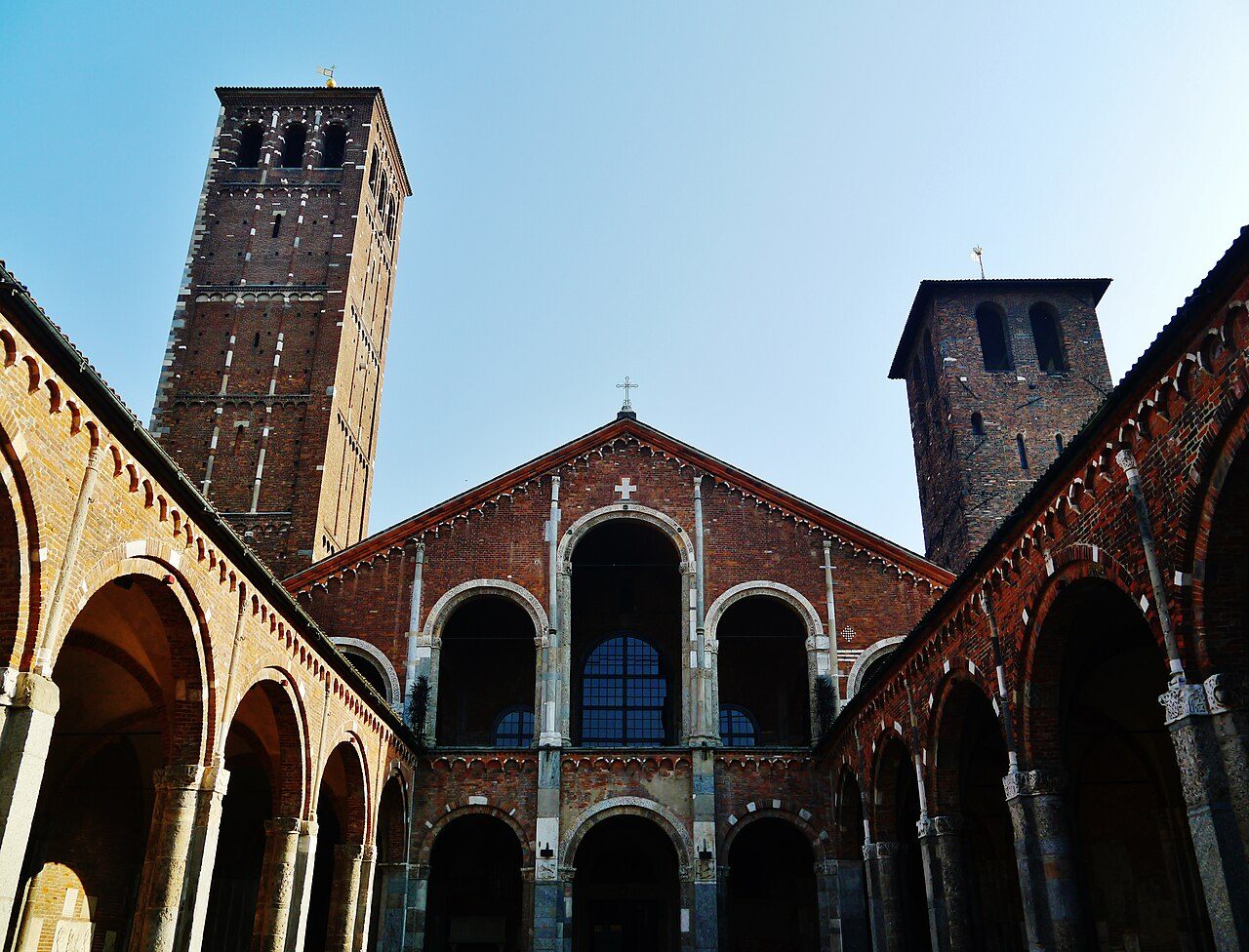
In the porticoed courtyard, facing the facade: one bell tower on the right, one on the left
Two different bell towers for two communities that shared one church. On the right the monks' tower, squat and ancient. On the left the canons' tower, taller, and finished only in the nineteenth century.
Spot the detail
At the top of the left-hand tower, the two highest stories, with the loggia for the bells
The full story
One church, two bell towers, and they don't even match. It isn't a whim. It is what happens when two communities have to share the same house.
Look to the right of the facade. That low, massive tower is the monks' bell tower. It dates from the ninth century: it is more than a thousand years old, and one of the oldest parts of the basilica you can see from out here. It belonged to the Benedictine monastery founded beside the church in 784, in the time of Charlemagne.
Now look left. The taller tower is the canons' bell tower. The canons were the priests who held services in the basilica.
The quarrel over the bells
Monks and canons used the same church, but they were two separate communities, and they did not get along. All through the twelfth century they fought over the bells too. It was no small matter: whoever rings the bell calls the faithful, and whoever calls the faithful is in charge.
In 1128 Archbishop Anselm tried to settle one of these disputes and granted the canons a new tower. It was still half built, and the documents of the time record an almost comic detail. There was only one bell, and it could not ring: the rope was missing. It only really began to make itself heard toward the end of that century.
Even then the tower was not finished. For seven hundred years Sant'Ambrogio lived with an incomplete bell tower. The two stories at the top, the ones with the loggia for the bells, were added only at the end of the nineteenth century.
Three eras at a glance
So, standing still in the courtyard, you take in more than a thousand years of building at a glance. A tower from the time of the monks, one from the time the basilica was being rebuilt, and a top added by our great-grandparents. It is all brick, and that is misleading. These are three eras, side by side and one on top of another.
There is a small moral here too. The quarrel over the bells ended centuries ago. The two towers, though, still stand on either side of the same facade, each on its own community's side: the monks to the south, the canons to the north.
About this stop
Anecdote
The Canons' Cutlet
In the Middle Ages monks and canons shared the basilica of Sant'Ambrogio and quarreled even at table. In the twelfth century an archbishop's ruling set the rule: every September 17, feast of Saint Satyrus, the monks owed the canons a nine-dish lunch, in return for their services at the golden altar. The parchment survives, wax seal included, and names lumbolos cum panicio. Some historians call them the ancestors of the cotoletta alla milanese, Milan's breaded veal cutlet. Others are wary: panicio may have meant a side of millet, a grain, not breading. In the 1700s the historian Pietro Verri published the menu and admitted he could not understand it.
Anecdote
The Bell That Could Not Ring
In the Middle Ages two communities shared the basilica of Sant'Ambrogio: the monks and the canons, the priests who held its services. They quarreled over everything, bells included. In 1128 Archbishop Anselm granted the canons a new tower, on the north side: it is the bell tower to the left of the facade. It was half a victory. The tower was unfinished and had a single bell, which on top of that could not ring: the rope was missing. The canons had to wait decades to make themselves heard. And the bell tower was only truly finished at the end of the nineteenth century, seven hundred years later.
Because the basilica had two landlords. From 784 a community of Benedictine monks lived beside the church, and alongside them were the canons, the priests who held services in the basilica. They were two separate communities, often at odds. The monks had the tower on the right, from the ninth century. The canons got theirs in the twelfth century, on the left. It is taller, but its top is much more recent: it was added only at the end of the nineteenth century.
Next stop
Walk under the facade's portico, go in through the central doorway and stop at the start of the nave