Stop 6 of 7Must-see
The Museo Teatrale
Where to stand
In the Casino Ricordi, the small arcaded building to the left of the theater, and then in the museum's rooms
Portraits of divas, antique instruments, Liszt's piano, Verdi's death mask. The theater's museum opened in 1913 thanks to a collection snatched from one of the richest men in the world.
Spot the detail
Find Angelo Inganni's painting of La Scala's facade. What is missing in front of the theater?
The full story
The museum begins with a tug-of-war. In 1911 an antiques dealer, Jules Sambon, puts his collection of theater-related objects up for auction in Paris. A group of Milanese decide it must come to La Scala.
Among them is Arrigo Boito, composer and librettist. The state promises help, fifty private citizens chip in, and the asking price is reached.
At that point Sambon backs out. There is another buyer, he says: someone he cannot name, but very powerful. It was John Pierpont Morgan, the American financier, one of the richest men in the world.
The museum's account is that La Scala's prestige persuaded him to give way. Less than two years later, the rooms opened to the public.
Inside the museum's rooms
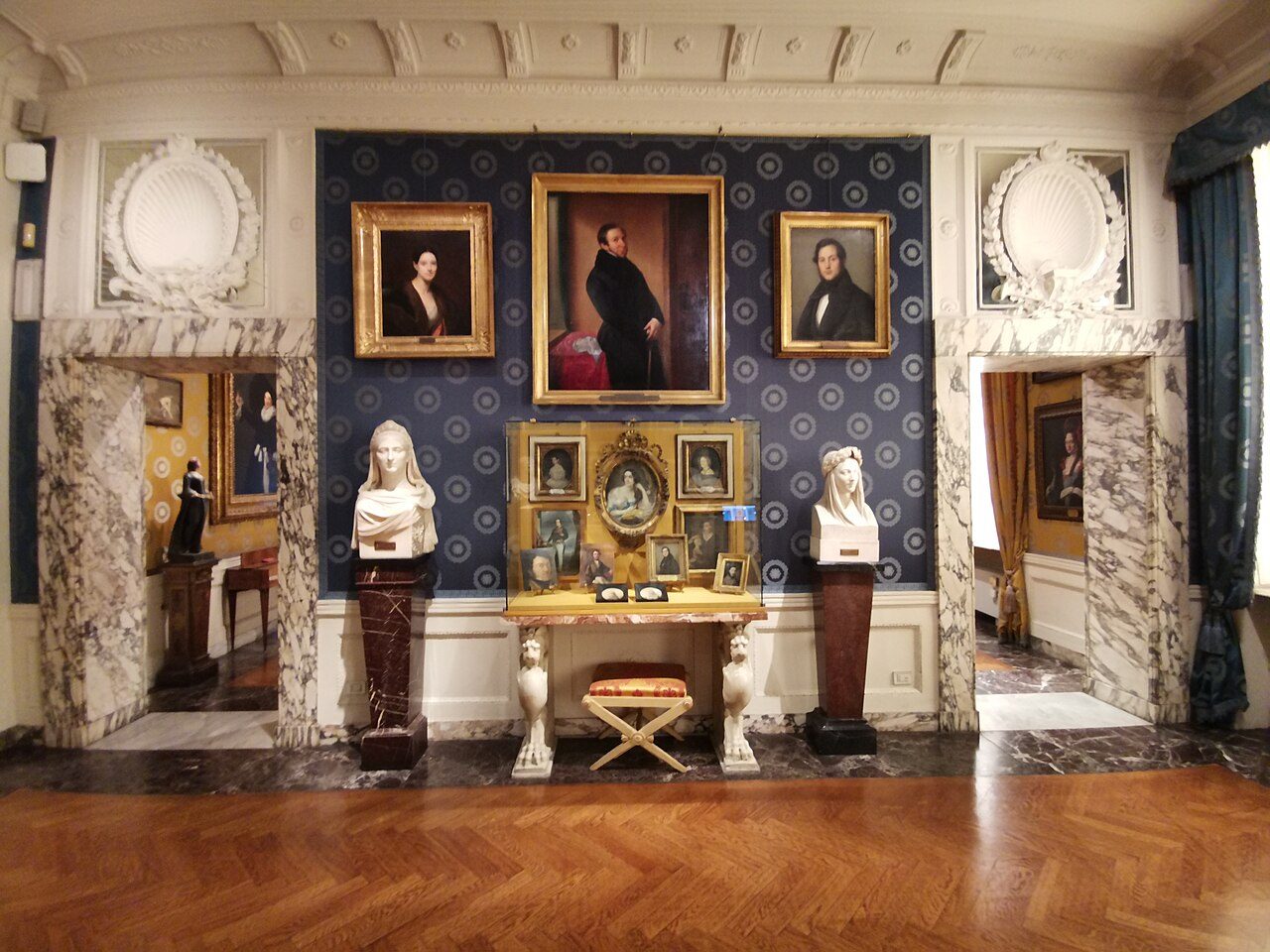
You enter through the of the , the columned hall with busts of the greats, from Puccini to Toscanini. Then the rooms turn small and crowded, like a collector's home. The displays can change, so take what follows as a wish list and not as a map.
Look for the portrait of Piermarini with a compass in his hand: he is the man who designed the theater. Look for the porcelain figures of the masks of the commedia dell'arte, Italy's old masked comedy.
Look for the piano of Franz Liszt, the great pianist of the 1800s. Its story reads like a novel: it ended up in the villa of the poet Gabriele D'Annunzio, and the musician's granddaughter had to fight a long legal battle to get it back and donate it to the museum.
In one display case there is even a dress sword of Napoleon's, given in Paris to the singer Giuditta Pasta. It says a lot about what an opera diva was back then.
The Giuseppe Verdi room
The room that stays with you is Giuseppe Verdi's. Here are the objects found in the Milan hotel room where the composer died in 1901: the death mask, the cast of his right hand, a lock of hair. And beside them, his travel writing desk with inkwell and pens, a French dictionary, and a deck of playing cards. On one side the national monument, on the other an elderly gentleman with his habits.
If you have time for only one thing, it is this room. Then follow the route toward the . The museum, after all, is the antechamber to what you are about to see.
About this stop
Anecdote
The collection snatched from financier Morgan
The Museo Teatrale, the theater museum next to La Scala, was born from a contested collection. In 1911 the antiques dealer Jules Sambon put his collection of theater objects up for auction and asked 450,000 lire. A group of Milanese wanted it for La Scala and, with help from the state and contributions from fifty private citizens, raised the sum. But Sambon backed out: another buyer wanted it too, one he could not name, but very powerful. It was the American financier John Pierpont Morgan. According to the museum's account, La Scala's international prestige persuaded him to step aside. That collection is still the heart of the museum.
Next stop
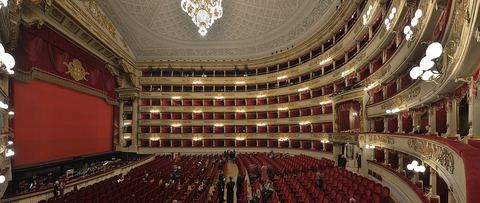
Follow the museum route to the boxes that open onto the auditorium