Stop 2 of 6Must-see
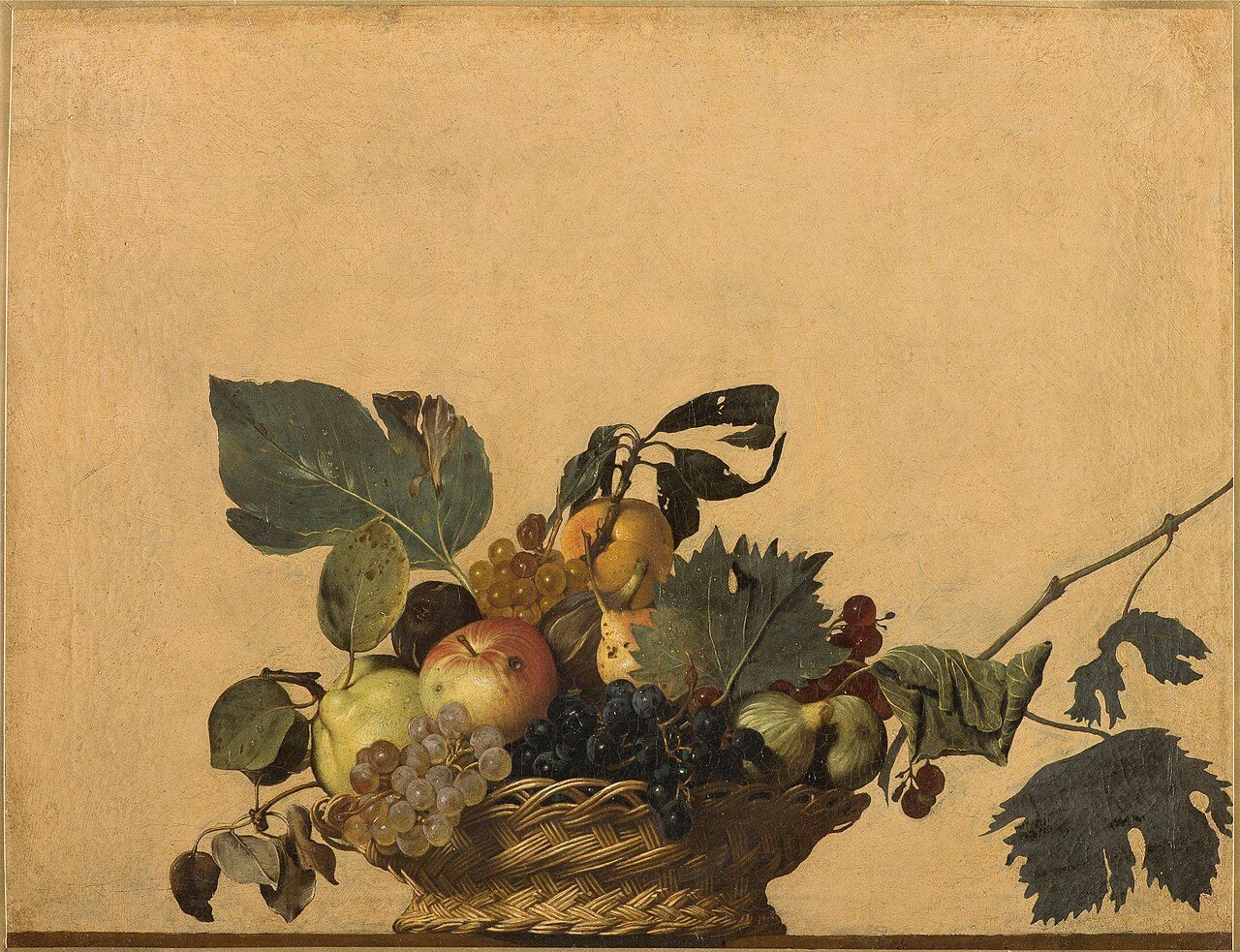
Caravaggio, the Canestra di frutta
Where to stand
In the first rooms of the visit. The painting is small: stand one step away, with your eyes level with the basket
A basket of fruit and nothing else, painted in Rome at the end of the sixteenth century. It is considered the prototype of the , and Cardinal Borromeo loved it so much that he could not find it a worthy companion.
Spot the detail
Look among the fruit for an apple with a flaw that any fruit seller would keep hidden
The full story
In front of you is the most famous painting in the Ambrosiana, and it is the size of a tray. This is the Canestra di frutta, the Basket of Fruit. A wicker basket, fruit, leaves, a pale and empty background. No saint, no story. At the end of the sixteenth century that was close to a provocation.
What to look at
Look first at how the basket sits. It is not planted firmly on the ledge: it juts just over the edge, toward you, as if one knock would be enough to send it over.
Then move on to the fruit. Green grapes and black grapes, figs, apples. Every grape is painted with magnifying-glass precision, and nearly everything is slightly off: a worm-eaten apple, an overripe bunch, leaves that are curling up. On top of that, these are fruits from different seasons, which you would never find together in a real basket.
A young Caravaggio in Rome
The painter is Michelangelo Merisi, known as Caravaggio. He was born in Milan, but he painted this picture in Rome, as a young man, when money was short. One detail you cannot see with the naked eye says so: the canvas is secondhand. Under the fruit are the traces of another painting, a decoration of grotesques, those fanciful patterns made of little figures and interlacing lines.
The prototype of the still life
Why does it matter so much? Because before this, fruit stayed at the edges of paintings, a side dish to saints and banquets. Here it is the star. The museum presents it as the prototype of the , the genre in which objects take the place of people.
A collector of the time reports that Caravaggio used to say this: making a good painting of flowers takes as much effort as making one of figures. Here he proves it.
On the meaning, scholars do not agree. Many read it as a , a meditation on time that wears everything away: beauty already has the worm inside it. Others think that what interested the cardinal who owned it was above all the perfect deception of the eye, fruit that looks real.
That cardinal was Federico Borromeo, the founder of this museum and the first owner on record. The Basket was already his in 1607, and eleven years later he gave it to the , the picture gallery, with the rest of his collection.
In the book where he describes the collection he confesses that he would have liked to hang another, similar basket beside it. Then he gave up: nothing could stand the comparison.
He was right, and it still holds. Look for the driest leaf, the one that seems about to come off. It has been about to fall for more than four hundred years.
About this stop
In culture
Caravaggio's fruit on the 100,000-lire note
The Ambrosiana holds Caravaggio's Basket of Fruit, a small painting of a wicker basket and nothing else. For almost twenty years Italians carried it in their wallets: it appeared on the back of the 100,000-lire banknote bearing the painter's portrait, issued from 1983 and in use until the euro arrived. A fine fate for a picture painted on a secondhand canvas, in the Roman years when the painter was short of money: his worm-eaten fruit became, quite literally, hard cash.
Next stop
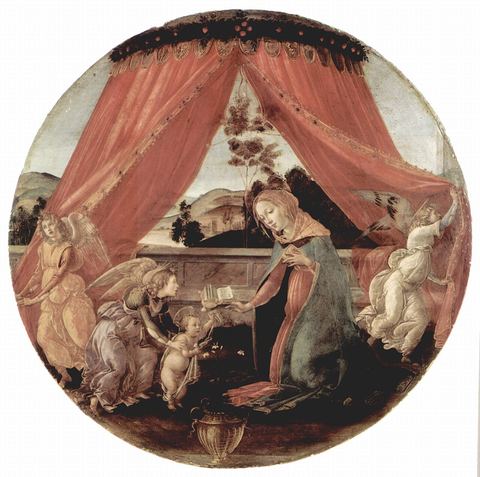
Stay in the first rooms and look for a round painting: a Madonna under a curtain held open by two angels