Stop 1 of 6
Piazza XXIV Maggio and the Customs Gate
Where to stand
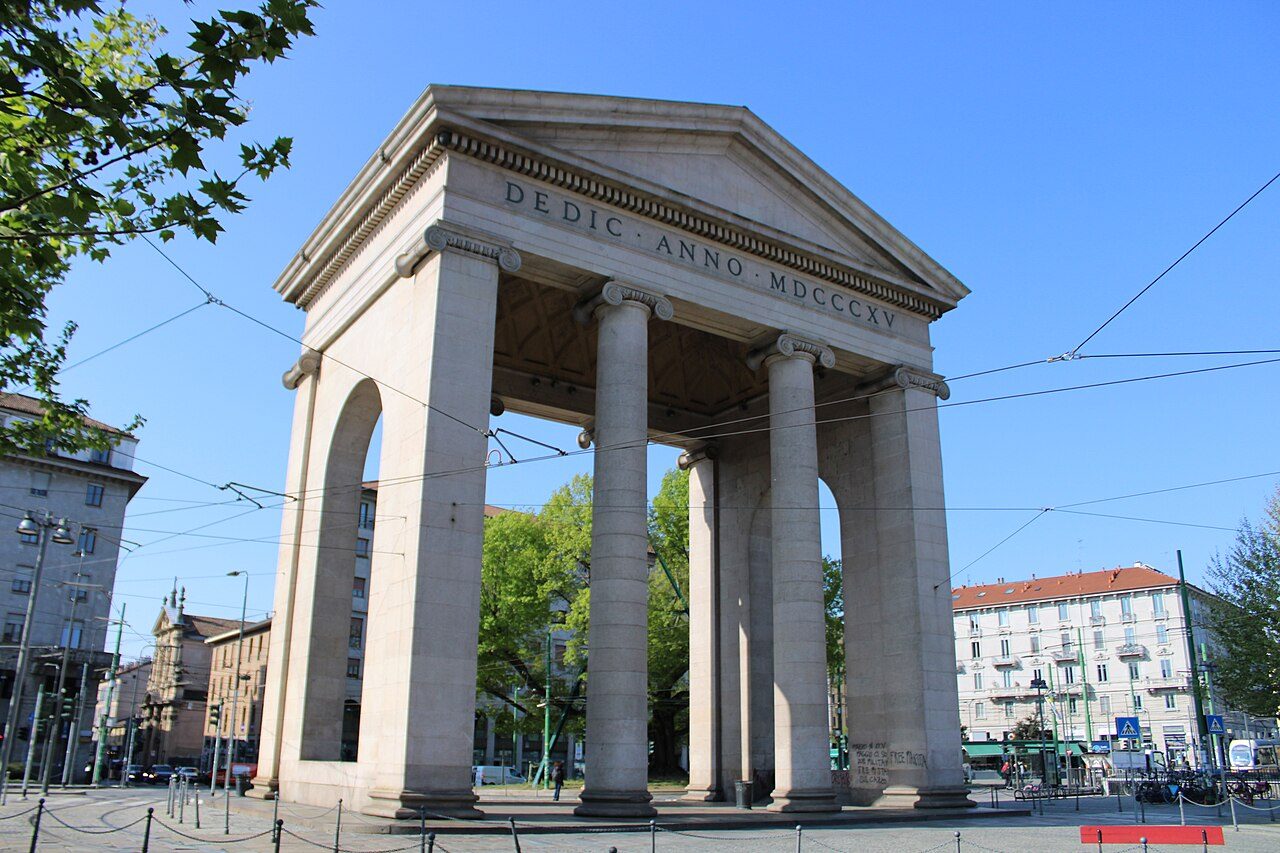
In Piazza XXIV Maggio, a few dozen meters from the big Neoclassical gate, at a spot where you can take in the whole of it
This gate was built to celebrate one of Napoleon's victories and to make anyone entering the city pay . Around it was a livestock market and, a short walk away, the port. This is where the Milan of dry land ended and the Milan of water began.
Spot the detail
The Latin inscription high up on the gate: try to read it
The full story
Stop where you can see the whole gate. It looks like an ancient temple stranded in the middle of a square.
In fact it's young: it was designed in the early 1800s by Luigi Cagnola, a Neoclassical architect, when Napoleon ran Milan. That's why it was first called Porta Marengo, after the battle Napoleon had won in 1800. Today it is the Porta Ticinese, the gate on the road toward the Ticino river.
Duty at the gate
A gate like this was never meant to defend anyone. It was meant to collect. This is where you paid , the tax on goods coming into the city, and beside the gate stood the tollhouses of the men who collected it.
Where there's a tax, there's someone trying to dodge it. In Milanese dialect that someone was a sfrosador, a smuggler, and with a port a short walk away the trade had its following.
Now look around. This used to be the Piazza del Mercato, the market square. Cattle for slaughter and horses were sold here.
Add the carts, the boatmen coming up from the port, the porters, the guards. It was the threshold of the city: streets on one side, water and loaded barges on the other.
The water under the square
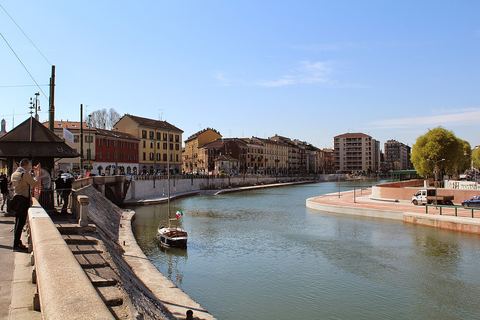
Water, for that matter, is under your feet too. The Cavo Ticinello still runs beneath the square. It is an , a canal that carries excess water away from the , the city's old dock. The gate was built right across that ditch.
And under the square lie the remains of a medieval bridge, which you can still see from the piazza. Milan didn't erase all its canals: many of them it simply covered.
There's a second way to read the gate. It was built to celebrate a war won and, a few years later, was made to say the opposite. The inscription up top is the signature on that change of heart.
Hold on to this idea before you walk down to the port: nobody just walked into Milan here. You were counted, weighed and taxed.
About this stop
Anecdote
The Oak That Is a Monument
In Piazza XXIV Maggio in Milan, a few steps from the Porta Ticinese city gate, stands a big red oak that is a war memorial. The engineer Giunio Capè had it planted here in 1924, to celebrate his son's return alive from the First World War and to remember those who had not come back. The day chosen was May 24, the date Italy entered the war in 1915, which gives the square its name. At its foot a wrought-iron marker carries a dedication to the fallen of the neighborhood. Today the tree is old and ailing. When there was talk of cutting it down, the neighborhood objected.
This stop on the map
Next stop
Leave the gate and head for the water, as far as the edge of the Darsena