Stop 2 of 8Must-see
An experiment on the wall
Where to stand
Still outside, in the piazza, or while you wait to go in
Leonardo did not paint in , which forces you to work fast. He worked , on the dry wall, so he could retouch at leisure. He got subtleties never before seen on a wall, but the paint began to fall off within a few years.
Spot the detail
On your way in, notice the automatic doors: no two of them are ever open at once. Why?
The full story
Leonardo hated being rushed, and demands it. You spread fresh plaster and paint while it is still damp. The color sinks into the wall and sets rock hard, but each section has to be finished that same day, with no second thoughts. Leonardo wanted the opposite: to come back to the work, correct it, and soften the shadows the way he did on wooden panels.
A wall treated like a panel
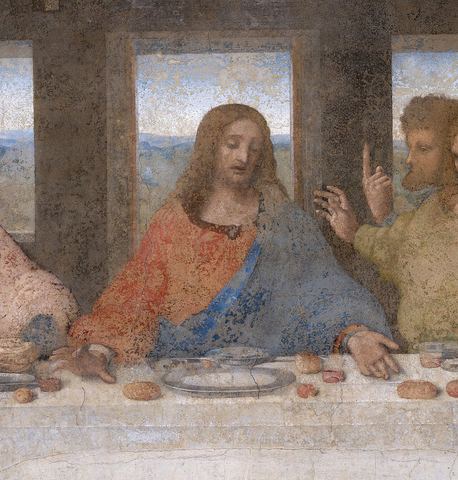
So he treated the wall like a panel. He let it dry, laid on a white ground and painted over it in , an oil-enriched tempera with the pigments bound in egg yolk. This is painting .
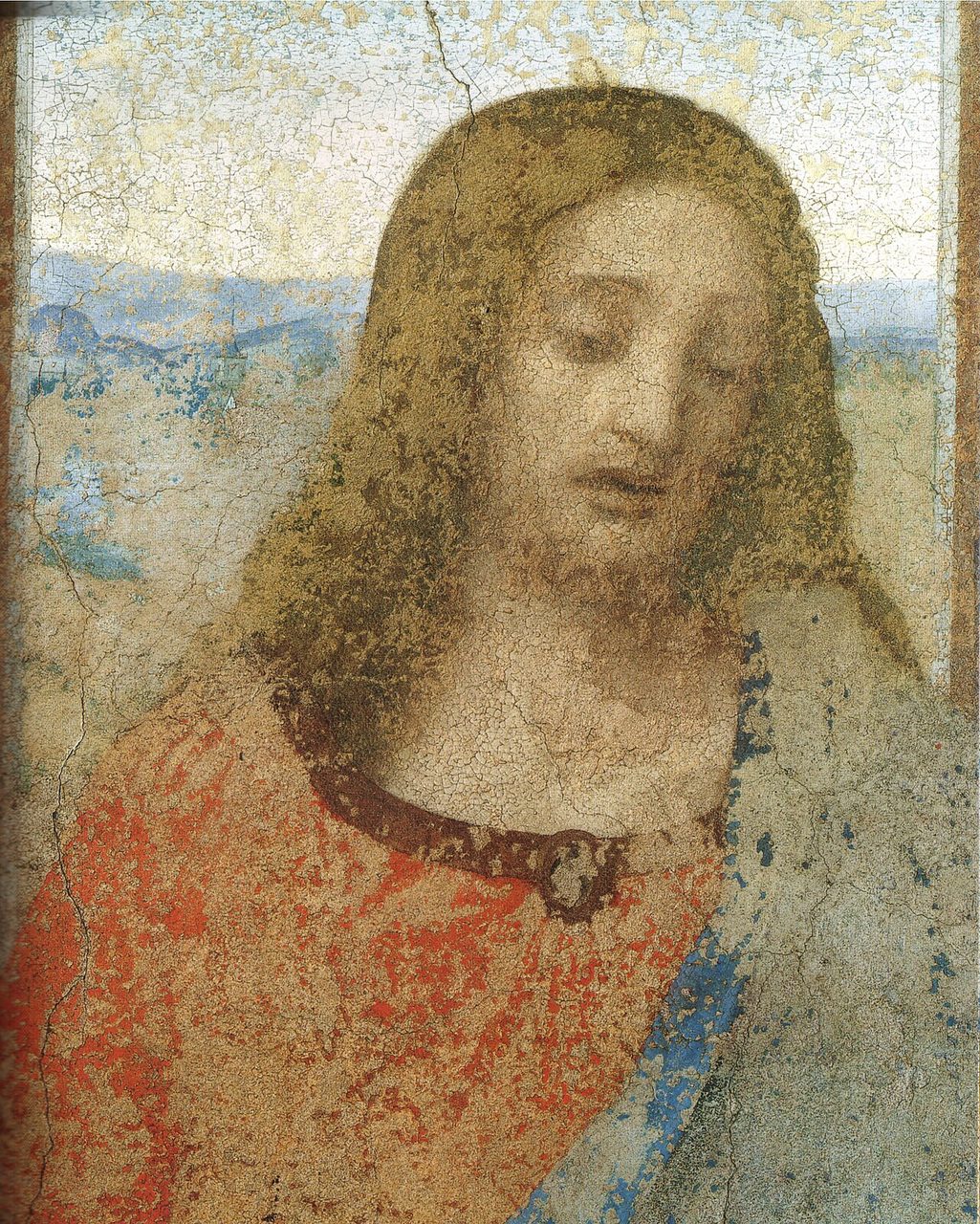
The result was exquisite: soft transitions of light and tiny details, impossible in a . But paint like that does not sink into the wall. It sits on top, like a thin skin. And this wall faces north and backed onto the convent kitchens: damp and swings in temperature guaranteed.
The first signs of decay
The trouble started early. In 1517, barely twenty years after the work was finished, a visitor named Antonio De Beatis noted that the painting “is beginning to spoil.” Half a century later Giorgio Vasari, painter and biographer of the artists, saw nothing in it but “a dazzled stain,” meaning a muddled blur. By the 1600s Cardinal Federico Borromeo was talking about flaking crusts.
Since then every age has tried to fix it, and often made things worse. Just one example: in the 1700s, to protect the painting, a curtain was hung in front of it. It trapped the damp and, every time it was pulled aside, it scraped the flaking paint.
Why so few go in
That is why today only a few people enter the room at a time, and stay fifteen minutes. The air is filtered and monitored around the clock, because too many people at once would push up the humidity and the dust. It is not a whim. You are about to see a fragile skin, not a sturdy picture.
Leonardo chose the freedom of an experiment and paid dearly for it. Yet without that experiment those faces would not have the shadows they have. If you find yourself thinking inside that it is ruined, you are right. Ask yourself, too, what it would have looked like painted in a hurry.
About this stop
In culture
Mark Twain preferred the copies
In 1867 the American writer Mark Twain entered the of the convent of Santa Maria delle Grazie to see Leonardo da Vinci's Last Supper. He found a dozen painters copying it, and noted that the copies looked better than the original. On the wall he saw faded colors, flaking faces, lifeless eyes. Napoleon's horses, he added, had kicked the legs off most of the disciples. Around him visitors sighed: such expression, such grace! He told the story in his travel book The Innocents Abroad: the painting had been a miracle of art, but three hundred years earlier. Harsh, but not entirely unfair: much of what he saw was repainting.
Because Leonardo wanted to work slowly. In you paint on plaster that is still wet, and you have to finish before it dries. He preferred a dry wall: a white ground, and over it colors in , an oil-enriched tempera, as if on a wooden panel. He could correct and refine as much as he liked. But the paint stayed on the surface instead of sinking into the wall, and it began to come away within a few years.
Because the painting is fragile and needs a stable climate. Too many people at once push up the humidity and bring in dust. After the restoration that ended in 1999, the choice was prevention: filtered air, conditions monitored around the clock, a few visitors at a time and for a short while. Even the automatic doors you pass through on the way in, which open one after another, are there to filter the outside air.
This stop on the map
Next stop
One more moment out here: the next stop tells you what to look for in the fifteen minutes you have