Stop 3 of 8
What to look for in fifteen minutes
Where to stand
In the piazza, just before you go in
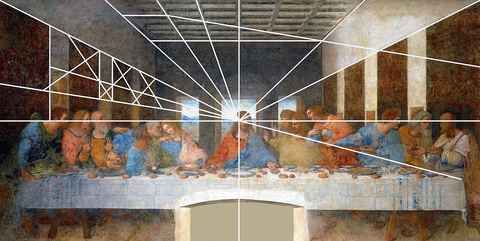
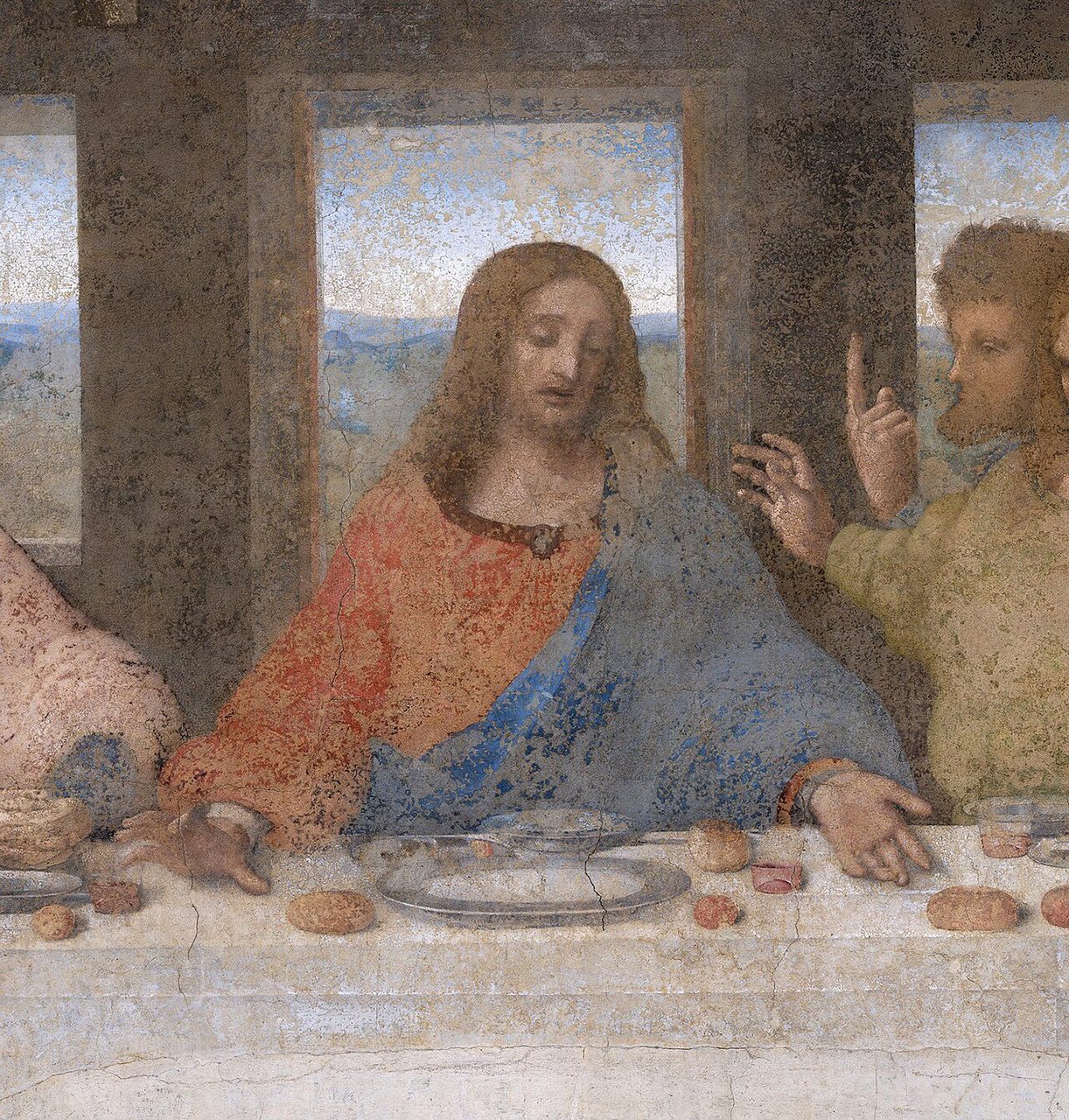
The painting shows the moment after one sentence: “one of you will betray me.” Don't try to see everything. Look at Christ, then the twelve apostles in groups of three, then the painted room around them. And before you leave, turn around.
Spot the detail
As soon as you walk in, find the one figure who stays still while all the others are in motion
The full story
You have fifteen minutes inside. Try to look at everything and you will see nothing. Better to walk in with just a few things in mind.
Four things to look for
The first is the moment. Leonardo starts from the Gospel of John. Jesus, at the table with his disciples, says that one of them will betray him, and they look at one another, not knowing whom he means.
In many earlier Last Suppers the apostles sit quietly, in neat order. Leonardo paints the instant after the sentence. What matters is the reaction, not the ritual.
The second is the twelve. They are not lined up. They are split into four groups of three, and each group reacts in its own way: some lean forward, some pull back, some ask a neighbor what is going on.
Don't try to identify them all. Follow the movement, which starts from Christ and spreads toward the two ends of the table.
The third is Judas. Before Leonardo he often sat alone, on the other side of the table, so nobody could get it wrong. Leonardo leaves him in among the others. Finding him is up to you.
The fourth is the room. The supper takes place in a painted hall, with a paneled ceiling, dark walls and three windows at the back. Seen from the , the real room seems to carry on up there, beyond the wall.
The state of the painting
A warning, to spare you a letdown. The colors are duller than in reproductions, and in many places the paint has fallen away.
At the bottom, in the center, the painting stops altogether: in the 1600s the friars cut a door through to the kitchen, and the opening took away Christ's feet. It is not a flaw. It is a wound, and it is part of the story.
The order to look in
Here is an order that works. For a few seconds take in the whole thing, without looking for anything. Then the painted room. Then the faces, from one end of the table to the other.
In the last few minutes turn around: on the opposite wall there is another painting, and it has something to tell you. For each of these moments there is a short stop, to read right there.
One last thing. The route to the room looks out onto a cloister, the Chiostro dei Morti, the Cloister of the Dead, where the friars were once buried. Give it a glance as you pass: it will come back in this story.
About this stop
Anecdote
On the Last Supper's plates, perhaps an eel
On the table of Leonardo da Vinci's Last Supper, in the of the convent of Santa Maria delle Grazie, there are plates of food. Only after the latest restoration, completed in 1999, could anyone look into them. John Varriano, who taught art history at an American college, studied them and in 2008 proposed a reading: grilled eel with slices of citrus, orange or lemon. It was a much-loved dish in Renaissance Italy, and it appears nowhere in the Gospels. The restorer Pinin Brambilla Barcilon simply saw fish. Either way, Leonardo did not paint a supper in Jerusalem. He set the table as people did in his own day.
The instant right after Jesus has said: one of you will betray me. The sentence is in the Gospel of John, which adds that the disciples looked at one another, not knowing whom he meant. Other painters had shown the apostles sitting in order, composed. Leonardo chooses the reaction: the twelve are stirred up, they question one another, they protest, while Christ stays calm in the center.
This stop on the map
Next stop
Go in. In the refectory, stand toward the middle of the room, a few steps back from the painting