Stop 1 of 8
The duke, the friars and the slow painter
Where to stand
In Piazza Santa Maria delle Grazie, before you go in, with the church and the convent in front of you
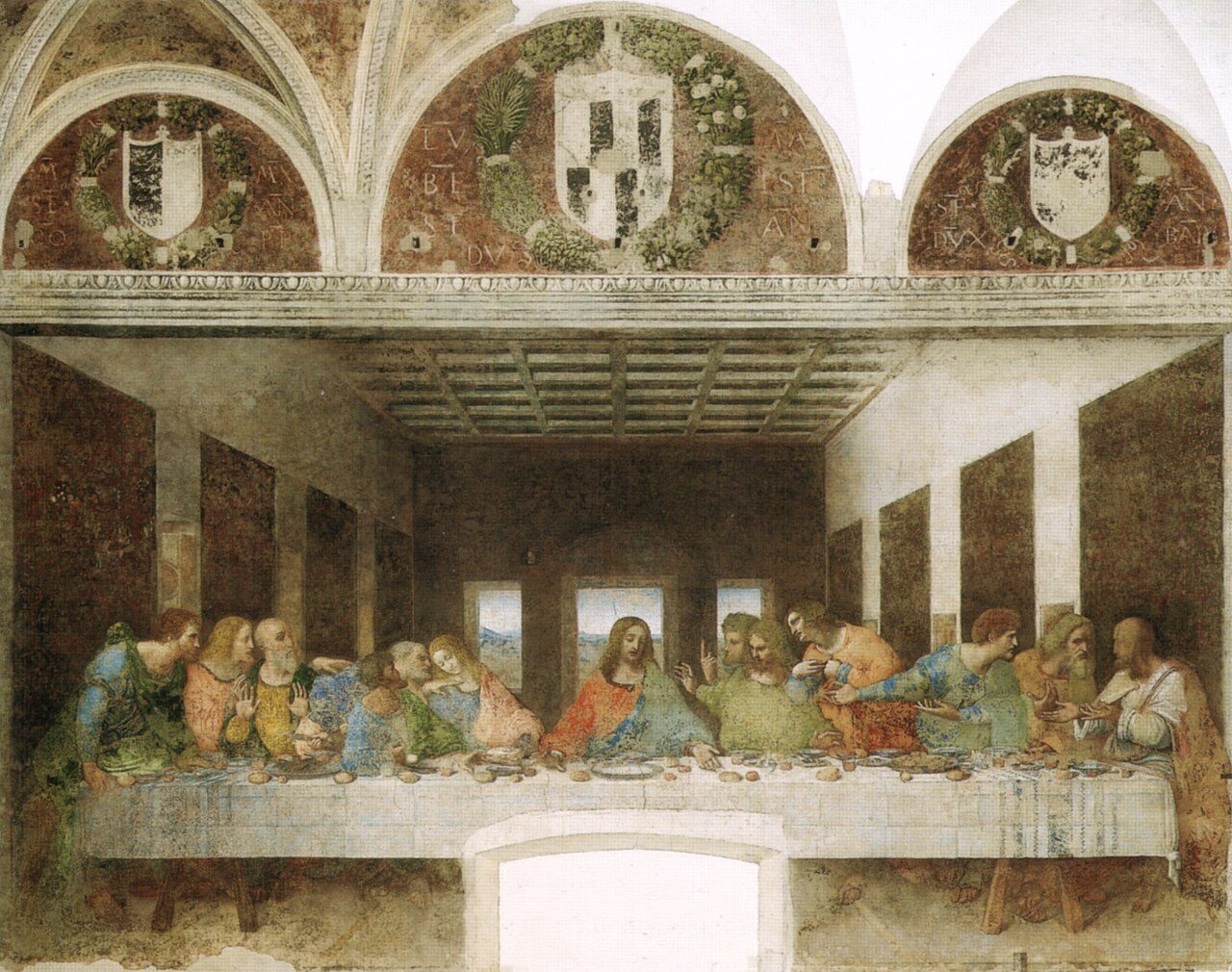
The Last Supper began as decoration for a dining hall. Ludovico il Moro, Duke of Milan, wanted it for the convent that was meant to become the Sforza mausoleum. Leonardo took about four years over it, at a pace all his own.
Spot the detail
Once you are inside, look up above the Supper: there are three painted half-moons. What is in them?
The full story
In front of you is a convent that a duke wanted to turn into a monument to his own family. Ludovico Sforza, known as il Moro, Duke of Milan, had chosen Santa Maria delle Grazie as the place to celebrate his power and as the mausoleum of the Sforza. He had half the church rebuilt, and you will find that story in the entry on the basilica. For the hall where the Dominican friars ate, the , he called in his court painter: Leonardo da Vinci, in Milan since 1482.
For Leonardo the commission came at a bitter moment. For years he had been working on a gigantic equestrian monument to Francesco Sforza, the duke's father, and in 1494 the project had come to nothing. What he was left with was a wall.
A table facing the friars
The subject was nothing new: there were already quite a few Last Suppers painted in . The idea is simple. The friars eat, and meanwhile they look at another table. In Dominican convents, Gospel scenes painted on the walls were meant to be always before the friars' eyes.
Even the height, on one reading, has a meaning. The painting takes up only the upper part of the wall, like the upstairs room where the Gospel sets the supper. Anyone sitting at the table had to look up.
Leonardo on the scaffolding
On the scaffolding Leonardo kept a pace all his own. We have this from the writer Matteo Bandello, who saw him at work.
Some days he never put down his brush from dawn until evening. Other days he stood for a long time looking at what he had done, without touching it. On others still he turned up, added a brushstroke or two and left.
It was not laziness. It was his way of painting: think first, then touch the paint.
The end of the work
In early 1498 the mathematician Luca Pacioli was speaking of the Last Supper as a finished work. The following year the French arrived in Milan and Leonardo left the city. The great Sforza mausoleum never got beyond a plan.
Before you go in, keep just one thing in mind. The Last Supper was not made for a museum. It was made to be looked at every day by people who were eating.
About this stop
Anecdote
Leonardo and the prior's face for Judas
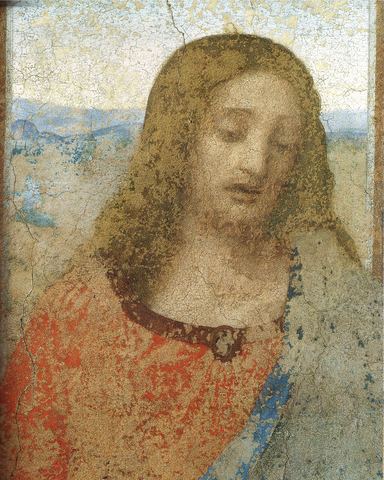
Leonardo da Vinci painted the Last Supper in the of the convent of Santa Maria delle Grazie, and it took him years. Giorgio Vasari, biographer of the artists, says the prior of the convent, fed up with watching him never finish, kept pressing him and finally went to complain to Ludovico il Moro, Duke of Milan. Leonardo explained that he still had two heads to paint: that of Christ and that of Judas, the traitor. For Judas, he added, if nothing better turned up he could always use the face of that prior, “so importunate and indiscreet.” The duke laughed, and the prior was left speechless.
Anecdote
The vineyard given to Leonardo
In 1498, the year Leonardo da Vinci finished the Last Supper, Ludovico il Moro, Duke of Milan, gave him a vineyard steps from the convent of Santa Maria delle Grazie: about one hectare of vines, to reward his work. Leonardo cared about it. The French confiscated it; he claimed it back and got it. Shortly before dying in France, he split it in his will between his pupil Salaì and a servant. Five centuries later the University of Milan searched the soil for remains of the old vines: the likeliest grape is Malvasia di Candia aromatica, replanted in 2015. The painting stayed with the friars. Leonardo kept the land.
This stop on the map
Next stop
Stay in the piazza: the next stop explains why the painting is in such poor shape