Neighborhood
Castello and Sempione
A fortress Milan wanted to tear down, and the park that grew from its parade ground
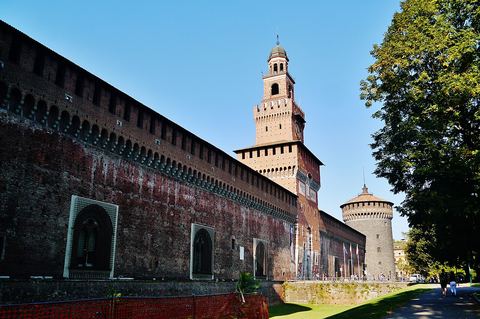
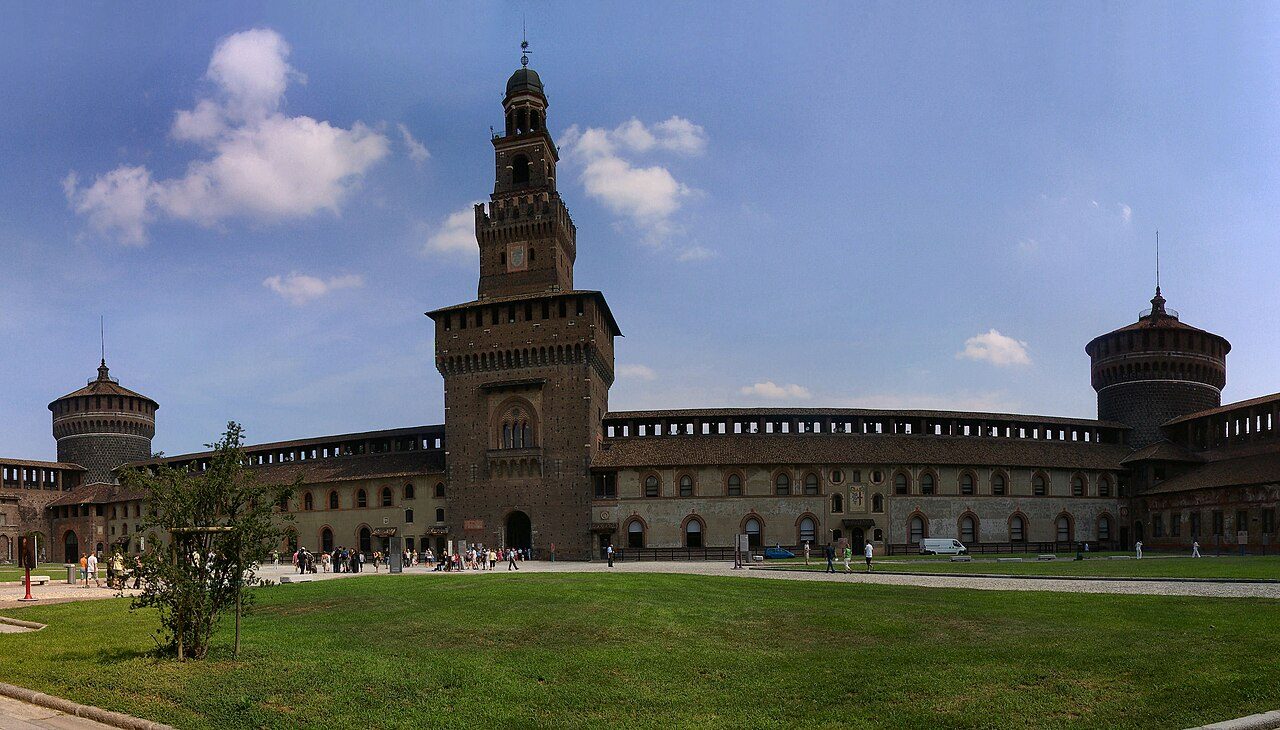
Look at the Castello, the castle, from the square: it seems to have been there forever, all in one piece. In fact it has been built, destroyed, and rebuilt several times, and the last time was little more than a century ago.
The Visconti began it in the second half of the fourteenth century, as a fortress. In 1447, when the last Visconti duke died, Milan declared itself a republic and demolished it. Three years later Francesco Sforza, the new lord, rebuilt it to live in. Under Ludovico il Moro, duke of Milan, it became one of the richest courts in Europe, and Leonardo da Vinci worked here too.
Then came three centuries as a barracks, under the Spanish and the Austrians. Napoleon ordered it demolished, and part of it really was torn down. After the unification of Italy someone proposed leveling it to build a residential district. Those who wanted to save it won: the architect Luca Beltrami restored it, and to a large extent rebuilt it, until 1905.
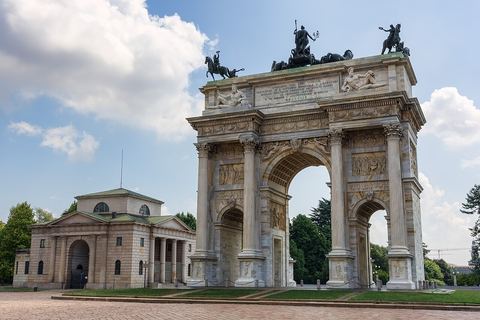
Behind the Castello the green begins. It was the dukes' park, then it became a parade ground for soldiers. Between 1888 and 1894 the architect Emilio Alemagna turned it into an English-style park, with carriage drives, a small lake, and a lookout. On the far side it is closed off by the Arco della Pace, the Arch of Peace.
The twentieth century added the rest: the Aquarium, built for the Exposition of 1906, and in the early 1930s the Palazzo dell'Arte, home of the Triennale, and the Torre Branca, a steel tower.
This is where Milan breathes. A fortress on one side, an arch on the other, and lawns and trees in between. After the stone of the center, you notice it at once.