Stop 5 of 8
Gargoyles, saints and a duke
Where to stand
In the rooms of the gargoyles and of the Sforza era, among the statues on plinths that came down from the outside of the Duomo
Monsters that drained off the rain, fifteenth-century saints and the portrait of a duke. These are the sculptures that stood outside, on the flanks of the Duomo. The most original is a Santa Lucia who protected the stonecutters' eyes.
Spot the detail
Near the passage that leads to the stained glass stand a few statues: find the two that look in worse shape than the others
The full story
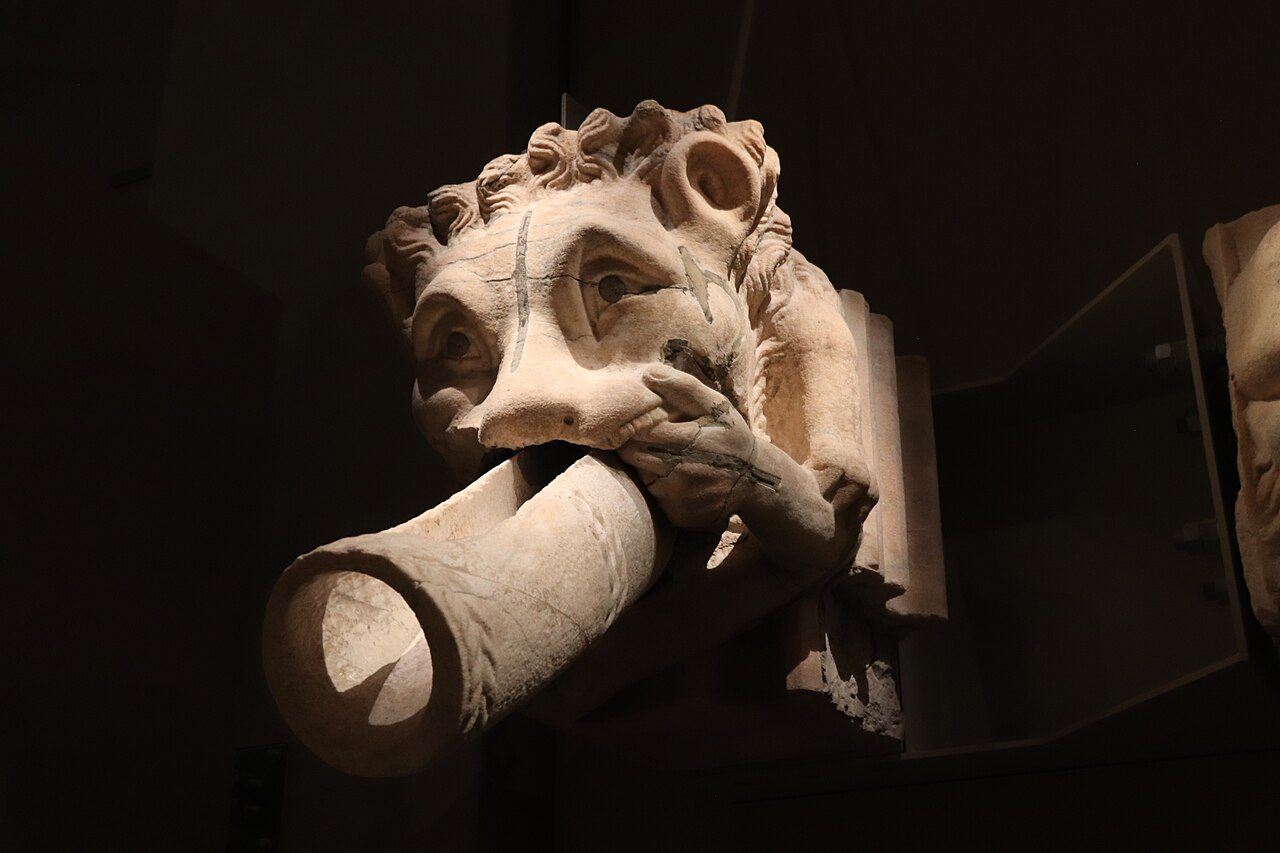
It is not only saints that come down from the Duomo. Monsters come down too. The first room is a parade of : the stone spouts that jut out from the walls and throw the rainwater clear of the marble.
A pipe would have done. The sculptors of the Duomo turned them into monstrous creatures, which nobody can make out from the piazza. Next to them is a large giant. On the cathedral even the supports and the water drains were sculpture.
A little further on you find the statuettes that stood on the capitals, at the top of the church's piers. They are small, and up there they were almost invisible. Yet they are finished as if someone were going to examine them up close. Today, at last, someone does.
The stonecutters' saint
In the room of the Sforza era, the dukes who ruled Milan after the Visconti, look for a young woman holding a small dish. On the dish are two eyes. She is Santa Lucia, Saint Lucy, a martyr from Syracuse, killed for her faith. According to tradition her eyes were torn out. That is why she protects eyesight.
And that is why she was the patron saint of the Duomo's stonecutters. Anyone who works marble with a chisel risks a splinter in the eye every day. The workers of the Fabbrica, the body that built the cathedral, had their own saint. The statue stood outside, on a window on the south side.
It was carved around 1470 by an artist whose name we do not know. Scholars call him the Master of San Paolo Eremita, after another of his statues kept in this museum. Look at the folds of the veil and the hair gathered in a net. The halo, though, is modern: the original one has been lost.
A duke among the saints
At the far end of the room there are two statues. The one on the left represents, in all likelihood, Galeazzo Maria Sforza, duke of Milan. It dates from the end of the fifteenth century and is attributed to Giovanni Antonio Amadeo, sculptor and architect of the Fabbrica.
A duke among the saints should come as no surprise. The lords of Milan always wanted a place on the Duomo. Even the San Giorgio from the first , on display in this museum, has the face of a Visconti, according to tradition.
Toward the Renaissance
Looking at the statues one after another, you notice the style changing. After the middle of the fifteenth century the sculpture of the Duomo frees itself from foreign models and finds a language of its own, more and more classical. The Sant'Agnese by Benedetto Briosco, from 1491, is the most delicate example. Later come the large statues by Cristoforo Solari, known as il Gobbo, the Hunchback, who worked on the site from the early sixteenth century: look for his Lazarus and his Sant'Elena.
That is the advantage of a building site that lasted centuries. In a single room you watch Lombard sculpture change style, generation after generation.
About this stop
Anecdote
The stonecutters' saint
Among the statues that came down from the flanks of the Duomo into the museum there is a Santa Lucia, Saint Lucy, holding a small dish. On the dish are her eyes: they are the symbol of her martyrdom, and the reason people pray to her for their sight. But at the Duomo she had an extra job. She was the patron saint of the building site's stonecutters, who risked a splinter in the eye every day as they worked the marble. She was carved around 1470 by a master who has remained nameless. Scholars consider her one of the most original statues of the cathedral.
Next stop
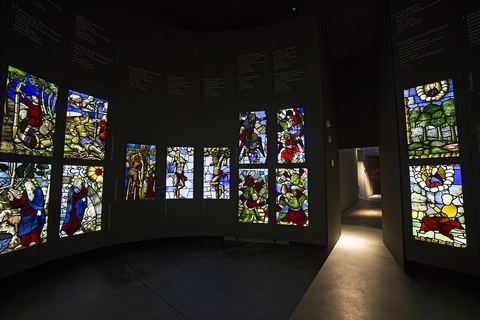
Go through the short dark corridor that leads to the round room of the stained glass