Neighborhood
The Lakefront
From the old harbor to Villa Olmo, the shore where Como struck a pose
Start from Piazza Cavour and remember that until the nineteenth century this was water. It was the city's harbor, filled in to make a square open to the lake. Every so often the lake takes it back: when it floods, the square ends up underwater.
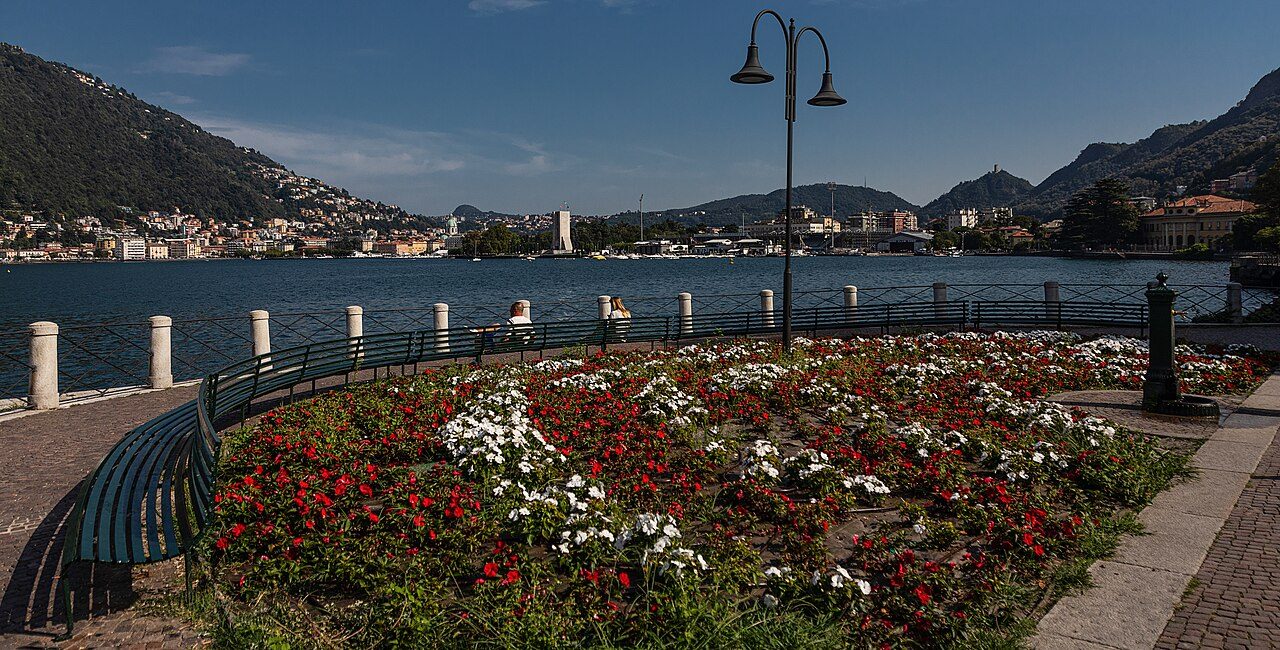
From here the shore bends west and becomes a promenade, the lungolago. The first stretch is pure twentieth century. In the gardens you find the Tempio Voltiano, a neoclassical temple opened in 1928 in honor of Alessandro Volta, the Como physicist who invented the battery.
Beside it rises the Monumento ai Caduti, the war memorial, a stone tower from 1933 based on a drawing by Antonio Sant'Elia, a Futurist architect. All around is the Rationalist quarter: the stadium from 1927 and the Novocomum by Giuseppe Terragni, an apartment building whose shape and size got it compared to an ocean liner.
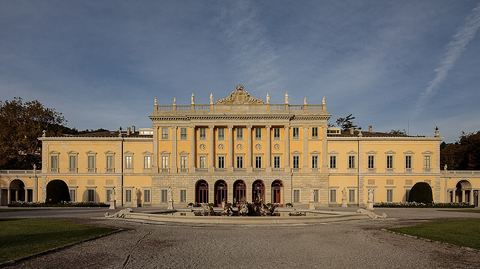
Then time runs backward. The shore of the villas is a row of aristocratic residences from the eighteenth and nineteenth centuries, built in the area of the old borgo of Vico, one of the neighborhoods outside the walls. Until 1959 the waterfront was theirs: that year the city decided to turn it into a promenade for everyone. At the far end Villa Olmo awaits, the most theatrical of them all, built at the end of the eighteenth century for the marquis Innocenzo Odescalchi.
The lakefront is where Como has always wanted to be looked at. Walk it from Piazza Cavour toward Villa Olmo: the architecture goes backward, from Rationalism to neoclassicism, and the lake stays on your right the whole way.