Stop 5 of 8
The Prestino stele
Where to stand
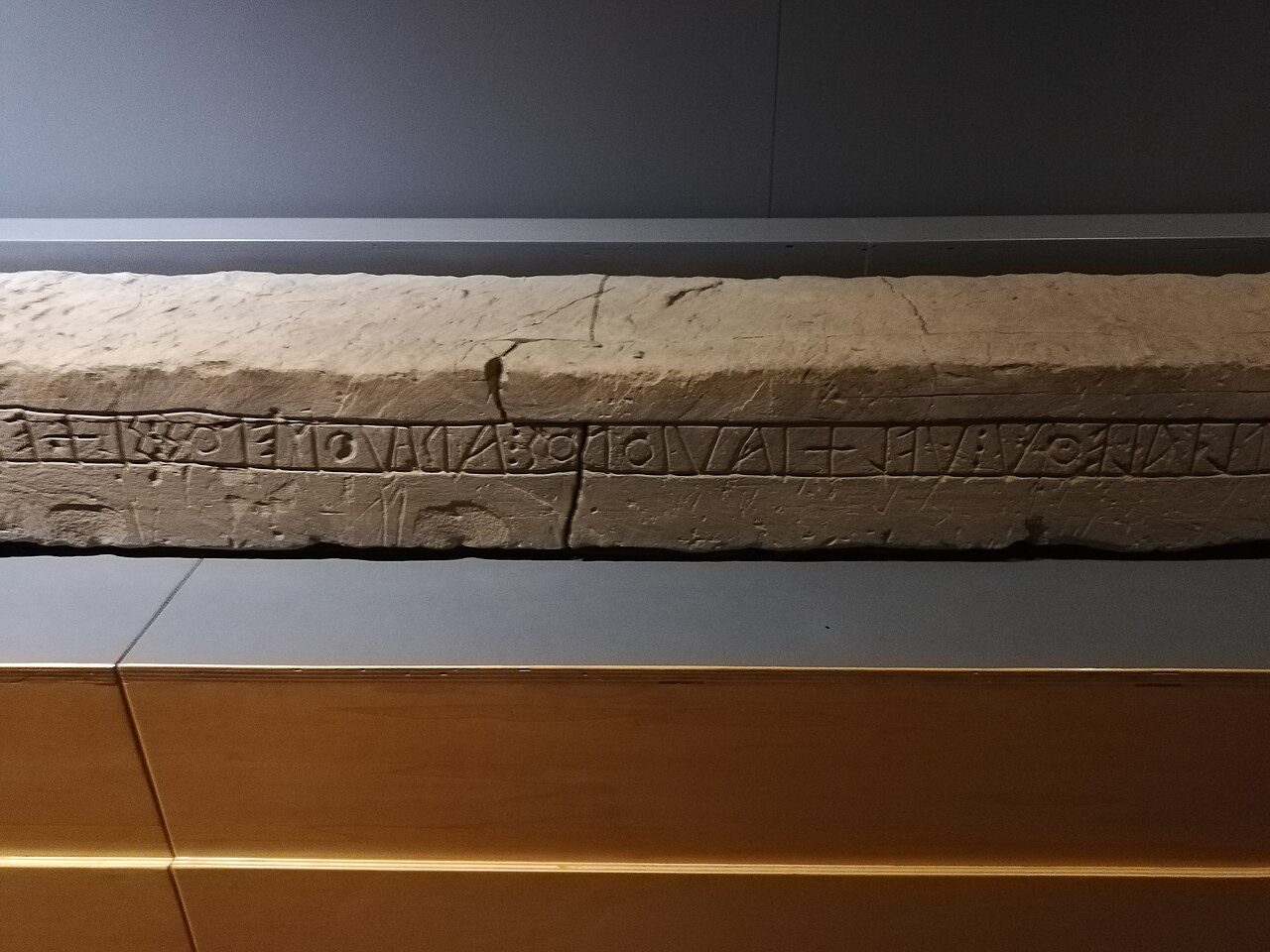
Toward the end of the protohistory section, in front of the long sandstone block with a carved inscription
A block of stone carved with a single sentence. It is the most important document we have of , the Celtic language spoken here in the fifth century BC, written in letters borrowed from the Etruscans.
Spot the detail
Look closely at the carved letters: which alphabet do they resemble?
The full story
Let's be honest up front: there is not much to see. A long block of sandstone with a row of carved signs. And yet, of all the pieces in the museum, this is the one linguists travel for.
It comes from Prestino, on the hills southwest of the city, where the settlement of Como's first people stood in the Iron Age. It dates to the fifth century BC, the same century as the great wagon on display in this section. The people who carved it belonged to the Golasecca culture: craftsmen and merchants, middlemen between the Etruscans and the peoples beyond the Alps.
Etruscan letters, a Celtic language
Now look at the letters. The alphabet is Etruscan in origin. It traveled up here along with the trade goods and was adapted to another language.
Because the language is not Etruscan and it is not Latin. It is , a Celtic tongue now extinct, from the same branch as the Celtic languages of the continent. Only a few inscriptions survive, scattered across northwestern Italy and Switzerland. This stele is the main document we have for knowing it.
What the sentence says
The sentence goes more or less like this:
uvamokozis plialethu uvltiauiopos ariuonepos sites tetu
The first word is a personal name, Uvamokozis. According to the most widely accepted reading he is the man making the dedication, and the last word, tetu, is the verb: gave. What was being dedicated, and to whom, scholars are still arguing about. With a language known from so few texts, every new word is a problem and a party at the same time.
A century before the Gauls
Why does it matter so much? Because it moves a date. The Celts in Italy are usually said to begin with the Gauls, who came down from the Alps in the fourth century BC.
This stone says a Celtic language was spoken here, and written, a full century earlier. It also says how they got there: by borrowing letters from the richer neighbor, the one they did business with.
Try reading the name out loud. Uvamokozis. He is one of the very few people from the Como of twenty-five centuries ago that we can still call by name.
About this stop
, a Celtic language that has since died out. We know it from a handful of inscriptions, and the most important is the Prestino stele, on display in this museum. It is written in an alphabet borrowed from the Etruscans, the neighbors the people of Como traded with back then. It dates to the fifth century BC: that means a Celtic language was already being written in Italy before the Gauls came down. Latin arrived centuries later, with the Romans.
Next stop
Move on to the Roman section, in the rooms of Palazzo Olginati