Stop 6 of 8Must-see
Roman Como and the face of Augustus
Where to stand
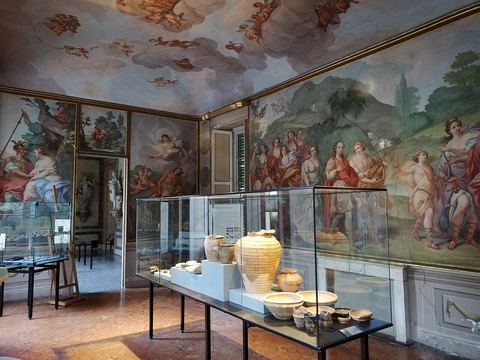
In the Roman section, in the rooms of Palazzo Olginati connected to the museum
The city of Pliny the Younger, told through its marbles and its everyday things: a portrait of Augustus, a monumental frieze of horsemen, two eggs that survived whole in a tomb.
Spot the detail
On the scale model of the city, find the parts marked in red
The full story
Look for a face first. It is Augustus, the first emperor, and his portrait is the most famous piece in these rooms.
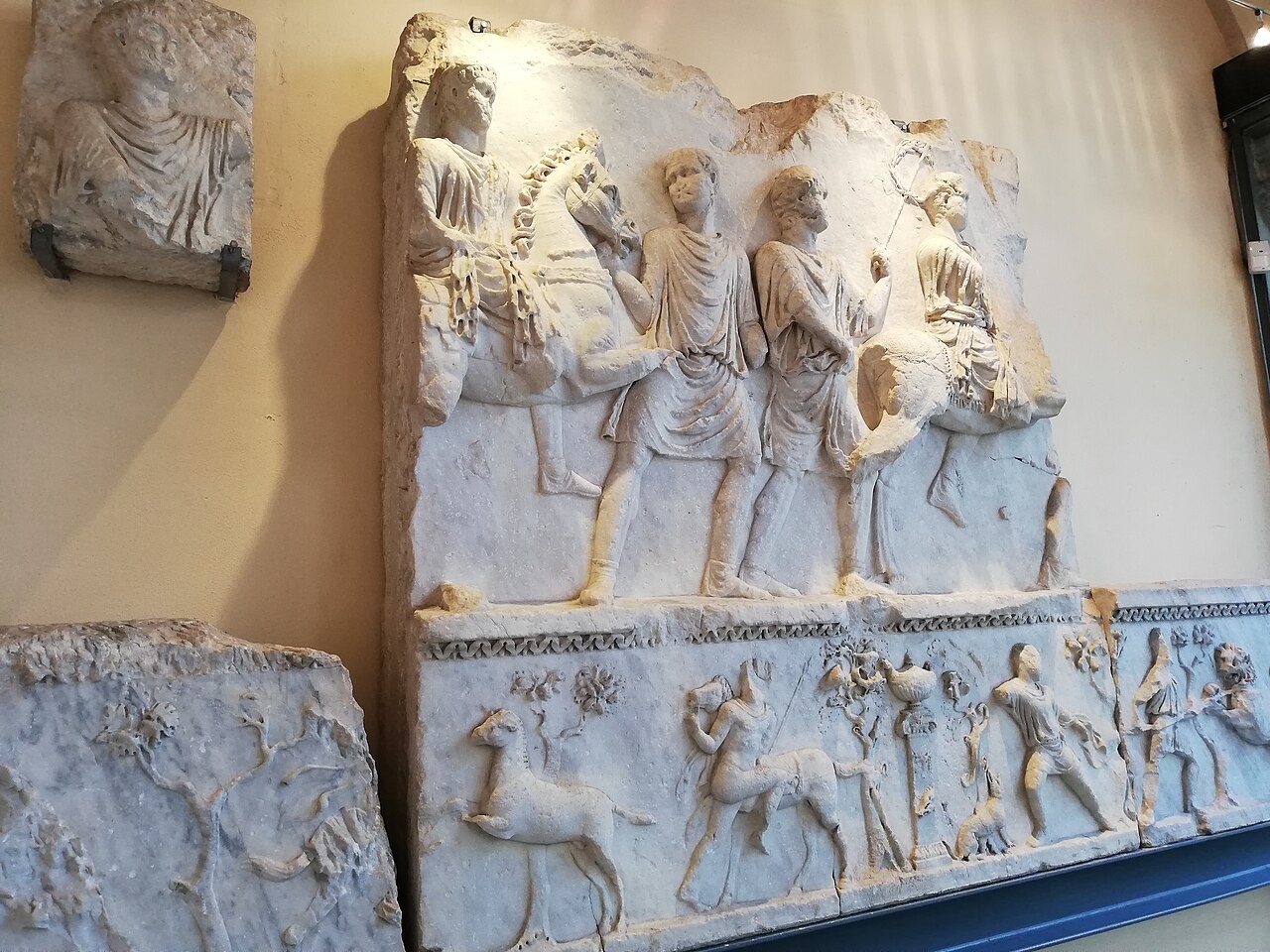
Around him is what remains of a refined city. The most spectacular piece is a monumental frieze: a parade of horsemen, accompanied by hunting scenes. A marble base remembers the city's most distinguished citizen: Pliny the Younger, a native of Como, to whom the statue that once stood on it was dedicated. Four figured bases complete the picture.
Everyday life in Roman Como
Then the tone changes, and this is the part I like best. The cases are arranged by theme: the army, trade, food, grooming, medicine, the cult of the dead.
From an inn for travelers, excavated in the city, come a bunch of keys, a hoe, a gridiron with its spit. There is a charred chestnut, and charred bread. And there are two eggs, left as an offering in a tomb at Mariano Comense, a town south of Como, which have come down to us whole.
The tomb of the sorceress
The strangest story comes at the end. In a tomb from the fourth century AD, among glassware and jewelry, were two amulets to be worn around the neck: a small gold sheet with a magical inscription, and a gold case holding a second sheet, this one of lead, rolled up. The archaeologists named it the tomb of the sorceress.
The city under your feet
Walk down the steps of the simulated excavation too. It is four meters deep, about 13 feet, and it shows the layers still preserved under the city. And look at the scale model, with the Roman monuments marked in red over the Como of today.
Since then the city has never stopped growing on the same spot. What you have seen in the cases comes, more or less, from under your feet.
Next stop
Go back into Palazzo Giovio and climb to the piano nobile, the main floor, with its frescoed rooms