Stop 1 of 7Must-see
The Colonne di San Lorenzo
Where to stand
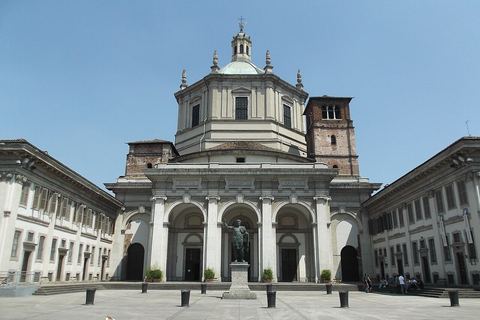
On Corso di Porta Ticinese, facing the row of columns, with the basilica in the background
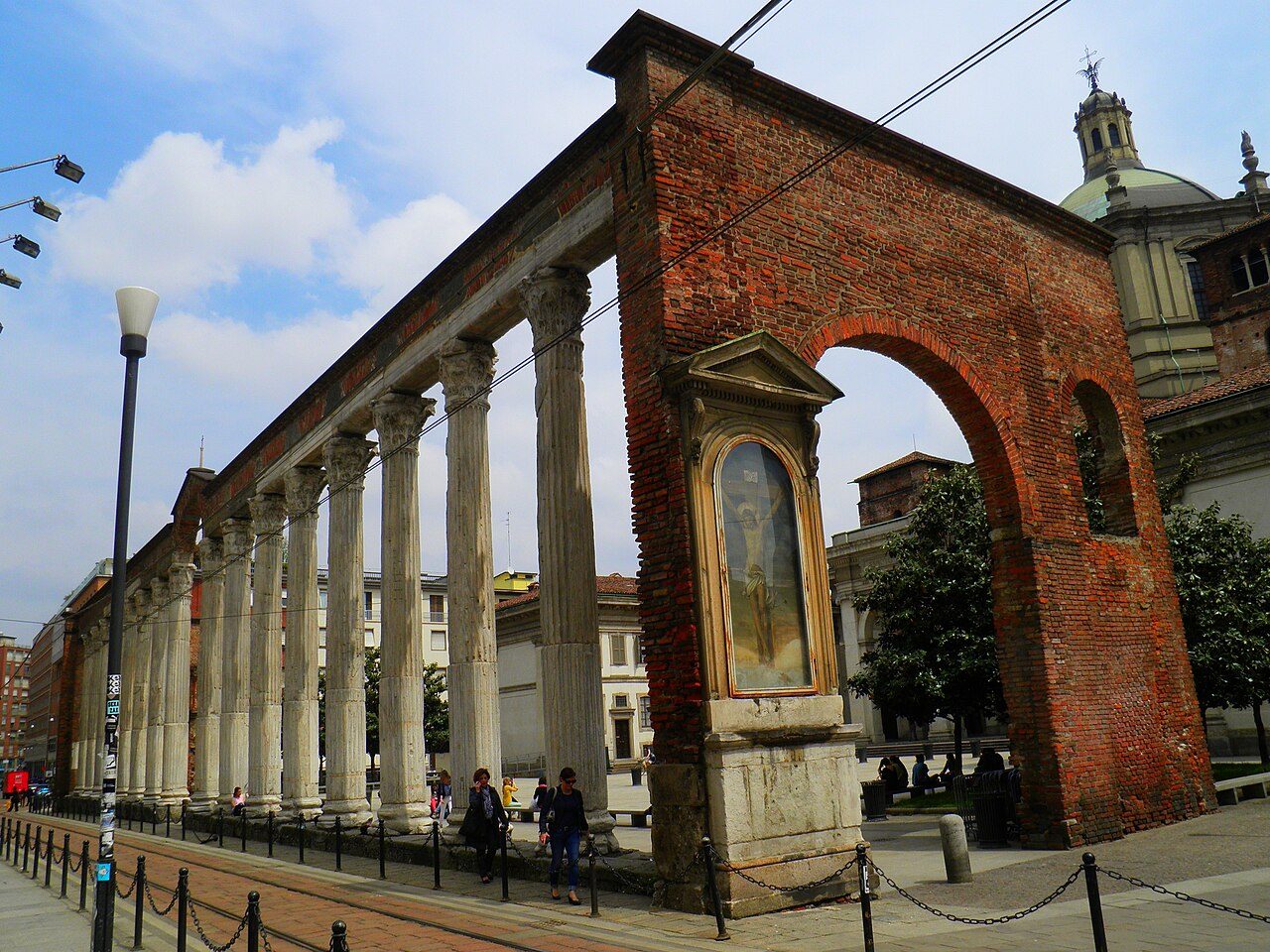
Sixteen marble columns carved in the second century for another building and put back up here, around 400, as the grand entrance to the basilica. They are the most striking Roman remains in Milan, and in the 1500s they came close to being torn down.
Spot the detail
The capitals at the top of the columns: compare one with another. Are they really all the same?
The full story
Stand in front of them and count: there are sixteen. These are the Colonne di San Lorenzo, the columns of San Lorenzo. They line the edge of the street, with trams rolling past, and not one of them was made to stand here.
Where the columns come from
They are made of Musso marble, a pale stone from Lake Como, and they rise more than seven meters, about 23 feet. They were carved in the second century for a building in Roman Milan: a temple according to some, a bathhouse according to others. Nobody knows for sure.
Two centuries later, the imperial court had a huge building site to finish, the basilica you see at the back. The columns were taken down, carried here, and set up again as the entrance to a , the colonnaded courtyard that stood in front of the church. Nothing else of the courtyard survives. The row in front of you was just one of its sides, the one you entered through.
Look at the middle. There the gap between two columns is wider, and above it is a brick arch with a small column and a cross. It is not Roman: it is a medieval addition, like the other brick sections that complete the row.
At one end of the row, a stone tablet set into the wall carries the name of the emperor Lucius Verus. It dates from 167, and it lists all his titles, one after another.
The threat of demolition
That the columns are still standing is almost an accident. In 1548 Milan was awaiting the ceremonial entry of Prince Philip, the future Philip II of Spain, and someone proposed knocking them down to widen the route of the procession. Ferrante Gonzaga, the governor of the city, said no. They have also survived the Goths, Barbarossa, and the bombs of World War II.
The columns today
The air of a lonely ruin, on the other hand, is recent. Until the 1930s a block of old houses stood between the columns and the church, and the colonnade was a backdrop to an ordinary street. The houses were demolished to give the basilica its entrance back.
Since then the columns have gone back to their old job, announcing the church. In the evening they have another one: they are among the busiest meeting spots in the city. Sitting at the foot of a Roman colonnade is, around here, a habit.
About this stop
Anecdote
The columns saved by a governor
In front of the basilica of San Lorenzo, along Corso di Porta Ticinese, stands a row of sixteen Roman columns, and it is almost by chance that they are still up. In 1548 Milan was preparing for the ceremonial entry of Prince Philip, the future Philip II of Spain, and to widen the route of the procession someone proposed knocking them down. Ferrante Gonzaga, the governor of the city, refused. Four centuries later the opposite happened: until the 1930s a block of old houses stood between the columns and the basilica, and it was the houses that were demolished, to make room for the columns.
Because they were part of the church. They were carved in the second century for another building, then taken down and put up again here when the basilica was built. They formed the entrance to a , the colonnaded courtyard that stood in front of the church, like the one that still exists at the basilica of Sant'Ambrogio. The rest of the courtyard has vanished, and later the space filled up with houses. Only in the 1930s were the houses demolished, and columns and basilica faced each other again.
This stop on the map
Next stop
Walk between the columns into the forecourt, as far as the bronze statue