Stop 8 of 8Must-see
The Studiolo dantesco
Where to stand
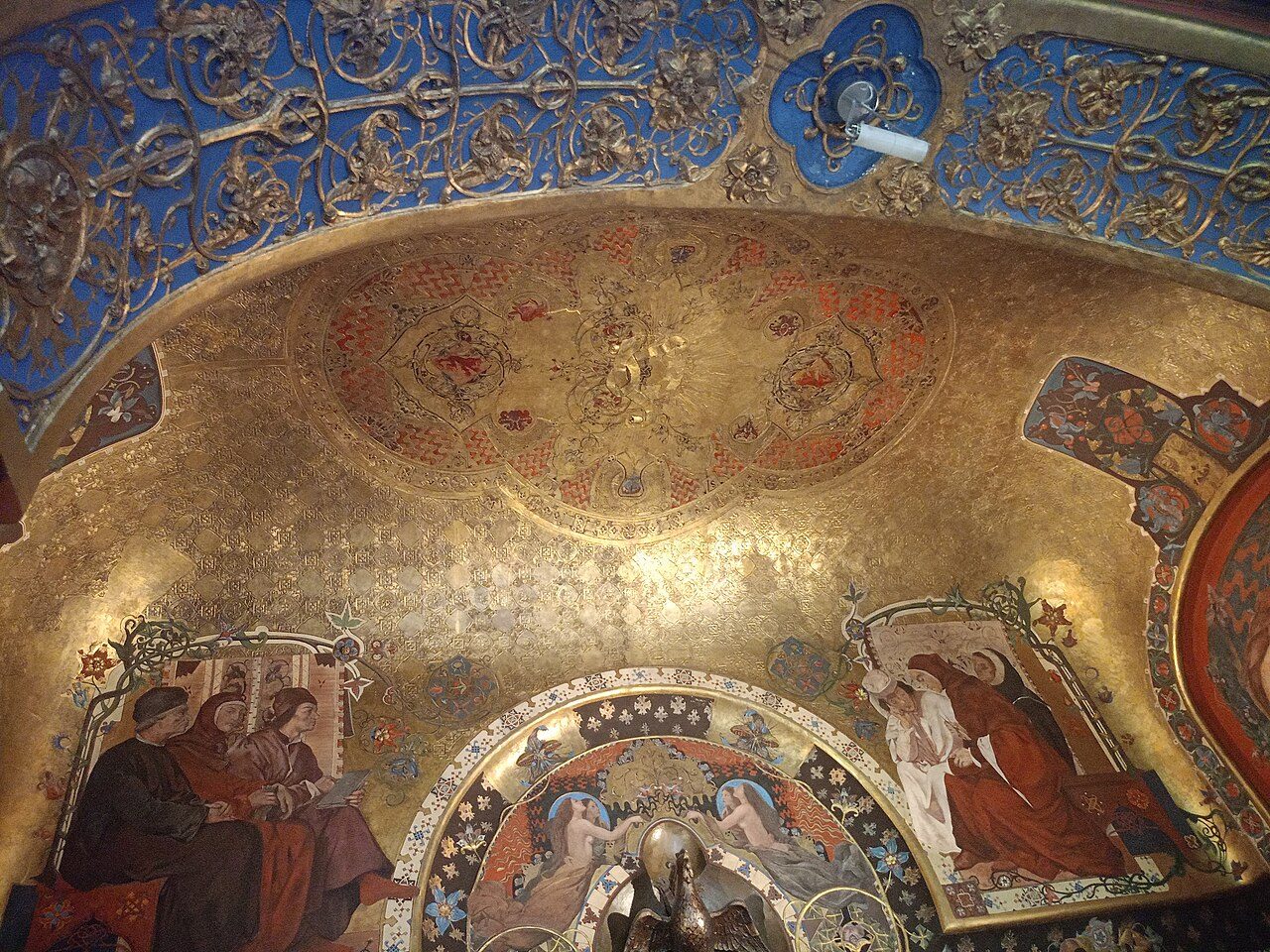
On the threshold of the Studiolo dantesco, the small room with painted walls and stained-glass windows
The count's private study, dedicated to Dante and decorated like a medieval dream. It is the only room in the house whose painted decoration survived the bombs of 1943: here you see the Poldi Pezzoli as it was.
Spot the detail
In the stained-glass windows, find the poet
The full story
You have walked this far through a house that is largely rebuilt. This room is the exception: it is the real one.
The Studiolo dantesco, the Dante study, is small, and it was the most private room of all. Here Gian Giacomo Poldi Pezzoli, the count who created the collection, had his study.
It was decorated in the mid-nineteenth century by two painters he trusted, Giuseppe Bertini and Luigi Scrosati, and there is only one theme: Dante and his Middle Ages. The surfaces are painted, the windows are colored glass. The style is a medieval fantasy, closer to a manuscript illumination than to a room. Being inside was meant to feel like being inside a book.
Dante, poet and exile
Why Dante? In those years he was not just a poet to study at school. For those who dreamed of a united Italy he was a banner, and his story was also the story of an exile.
The count knew exile firsthand: he had lived it after Milan's 1848 revolt against the Austrians, which he had supported. It is easy to think this study was also a way of saying so.
The only room that survived
Now for the reason this room ends the visit. In August 1943 incendiary bombs wiped out almost all the decoration of the house in a single night.
The drawing room, the Sala Nera or Black Room, had walls and ceiling paneled in ebony: lost. The bedroom had a coffered ceiling, a fireplace, the bed: lost. Stuccowork, frescoes, friezes: lost.
Not the Studiolo. It is the only space where the original painting is still in place.
So try an exercise. See how dense, colorful and excessive this space of a few meters is. Then think back to the rooms you have walked through and imagine them all like this: every wall worked, every ceiling an invention. That was the house the count left to Milan.
The rest of him you know through his paintings. Here, for a moment, you know him through his room.