Stop 2 of 8
The Armeria
Where to stand
On the ground floor, in the room of arms and armor: stop in the middle, then look up
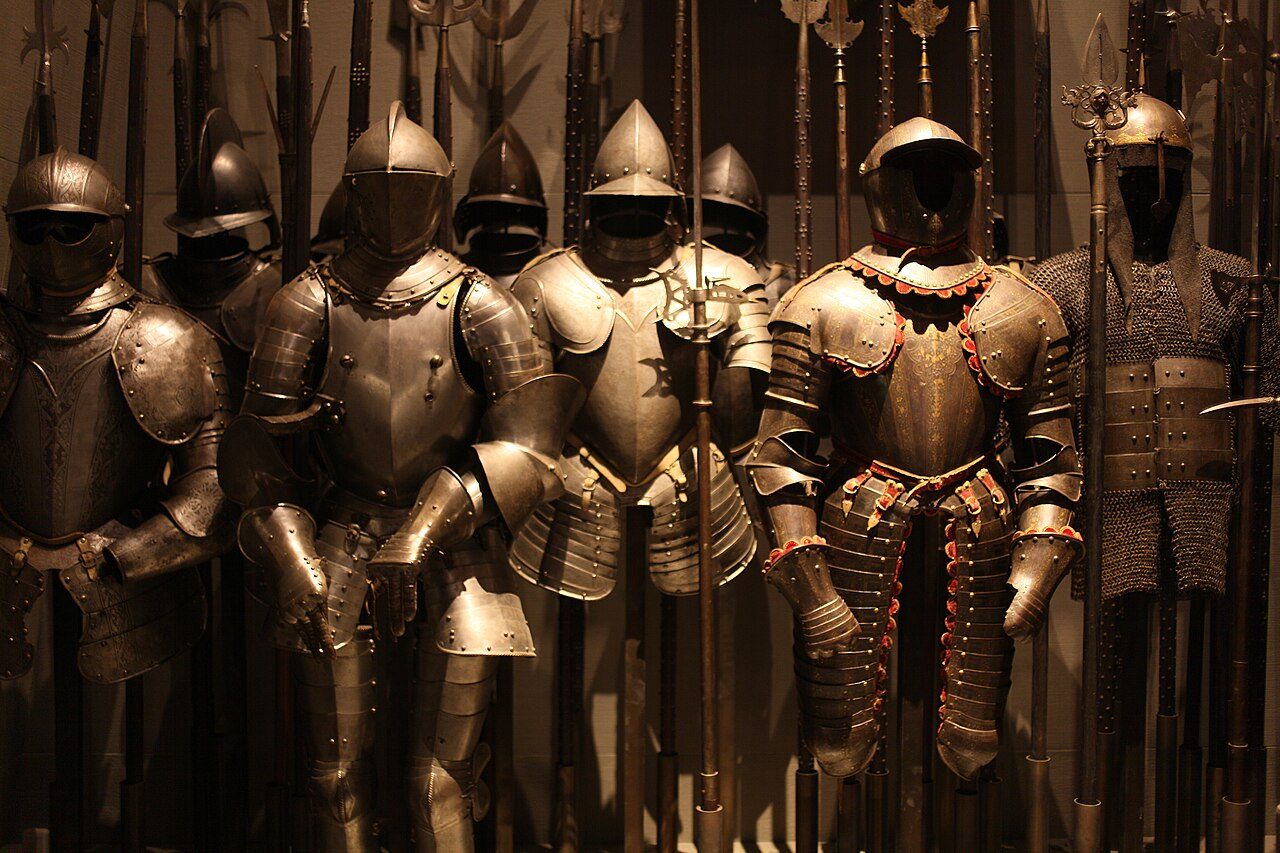
The count's first passion: hundreds of weapons and suits of armor, bought in his early twenties. The Gothic-style room that held them was destroyed in 1943. In 2000 the sculptor Arnaldo Pomodoro reinvented it from scratch, and today it feels more like a work of art than a museum room.
Spot the detail
Look up at the vault: what color is it, and what is it studded with?
The full story
It all starts here, in the Armeria, the armory. Before the Botticellis, before the clocks and the porcelain, Gian Giacomo Poldi Pezzoli bought armor.
The count who created this house is in his early twenties when he becomes master of the family fortune. In a couple of years he puts together hundreds of pieces.
There is nothing odd about it. In the mid-nineteenth century Europe has rediscovered the Middle Ages, and knights and tournaments fill novels, paintings and stage sets. Owning a real suit of armor is the most direct way into that dream. He gets into it so thoroughly that in time he will be considered the most important arms collector in Italy.
Peroni's Gothic room
To show them off he wants a room that is up to the task, and he does not hand it to just any decorator. He calls in Filippo Peroni, a stage designer. The result is a room, the first one finished in the house, and it works like a stage: the weapons are the actors.
That room is gone. The bombs of August 1943 destroyed it. The weapons survived because they had been taken away in time. The stage set, though, was lost.
Arnaldo Pomodoro's reinvention
Then, in 2000, the museum makes a bold choice. Instead of imitating the vanished Gothic, it gives the room to a contemporary sculptor, Arnaldo Pomodoro.
Pomodoro lines the walls with pietra serena, a gray sandstone, and cuts niches into them for the display cases. Inside, the objects seem to float because you cannot see the supports. The light comes from within the cases and casts no shadows. Overhead is a vault with reddish glints.
Notice how the effect changes. The suits of armor no longer pose like extras in a medieval drama. They stand apart, one by one, like jewels, and you realize how much care went into an object made to take blows.
Peroni had built a theater. Pomodoro built a treasure chamber. The underlying idea has stayed the same: here weapons are not studied, they are staged.
About this stop
Anecdote
1848: the insurgents raid the armories
The Museo Poldi Pezzoli's Armeria, its armory, grew out of the antique weapons that its founder, Count Gian Giacomo Poldi Pezzoli, began buying in 1846. On March 19, 1848, during the Cinque Giornate, Milan's five-day uprising against the Austrians, the insurgents had few weapons. They emptied the city's armories and the banker Ambrogio Uboldo's collection: longswords, axes, breastplates. According to the catalog entry for a painting of that assault in Milan's Museo del Risorgimento, the Poldi Pezzoli house's arms rooms were looted too in those days, and the stage weapons vanished from La Scala. The count, after all, sided with the insurgents. Some Uboldo pieces are now in this museum.
It was his first love as a collector. Between 1846 and 1848, in his early twenties, Gian Giacomo bought hundreds of antique weapons and suits of armor, mostly from the armorer Carlo Maria Colombo. It was the spirit of the age: Romanticism had rediscovered the Middle Ages and their knights. The Renaissance paintings came later, on the advice of painters and connoisseurs. The armory was the first room he had fitted out, and it is still on the ground floor, at the start of the visit.
Next stop
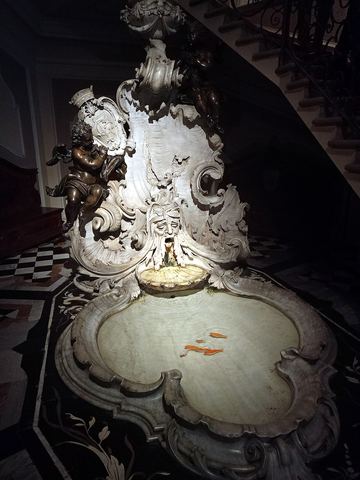
Leave the Armeria and head for the grand staircase with the fountain, which leads up to the second floor