In culture · Il Salotto di Milano, the City's Drawing Room
Hemingway at the tables of the Galleria
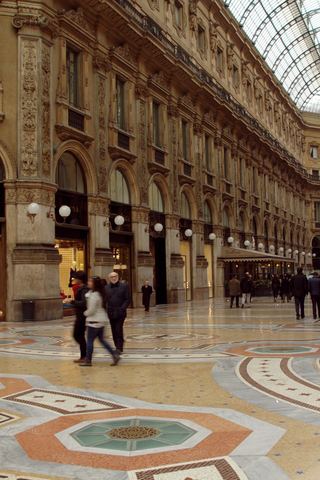
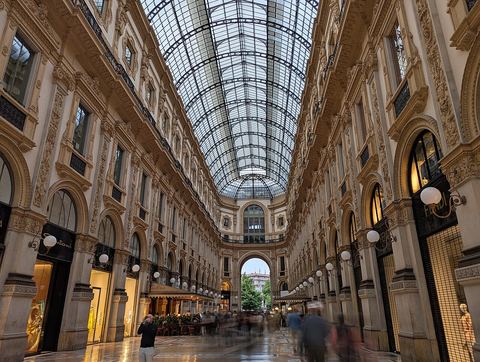
In 1918 a nineteen-year-old American spends long hours at the café tables of the Galleria Vittorio Emanuele II, Milan's glass-roofed arcade. He is Ernest Hemingway, later one of the twentieth century's great writers. He drove a Red Cross ambulance, was wounded on the Piave front, and is being treated in a hospital a few hundred meters from the Duomo, Milan's cathedral. In the Galleria he reads the papers, writes home, plays cards, and watches people go by. Some ten years later those evenings end up in a novel, A Farewell to Arms: the outdoor tables, the waiters coming and going, the shaded candles on the tablecloths, the people passing by.
The stop
Stop 6 of 7
Il Salotto di Milano, the City's Drawing Room
The place
Monument
Galleria Vittorio Emanuele II
More stories
- In culture · The Exit Toward La Scala
Mark Twain wanted to live in the Galleria
The American writer Mark Twain describes Milan in A Tramp Abroad, a travel book published in 1880. Of the Galleria Vittorio Emanuele II, Milan's glass-roofed arcade, he writes that he spent most of… - Record · The Exit Toward La Scala
Galleria, a word Milan exported
The Galleria Vittorio Emanuele II, Milan's glass-roofed arcade, was not the first covered street in Europe: London and Brussels already had theirs. But it was bigger than all those that came before… - In culture · The Exit Toward La Scala
The singers waiting for a contract
The Galleria Vittorio Emanuele II, Milan's glass-roofed arcade, ends in front of the Teatro alla Scala, the opera house, and in the nineteenth century that made it, in a few years, a kind of job…