Stop 5 of 6Must-see
The walls along Viale Cattaneo
Where to stand
On the avenue, between Porta Torre and the western corner tower, looking at the wall from the outer side
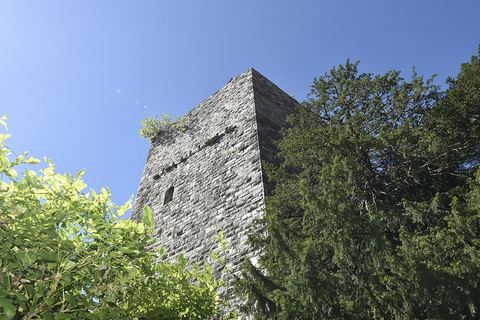
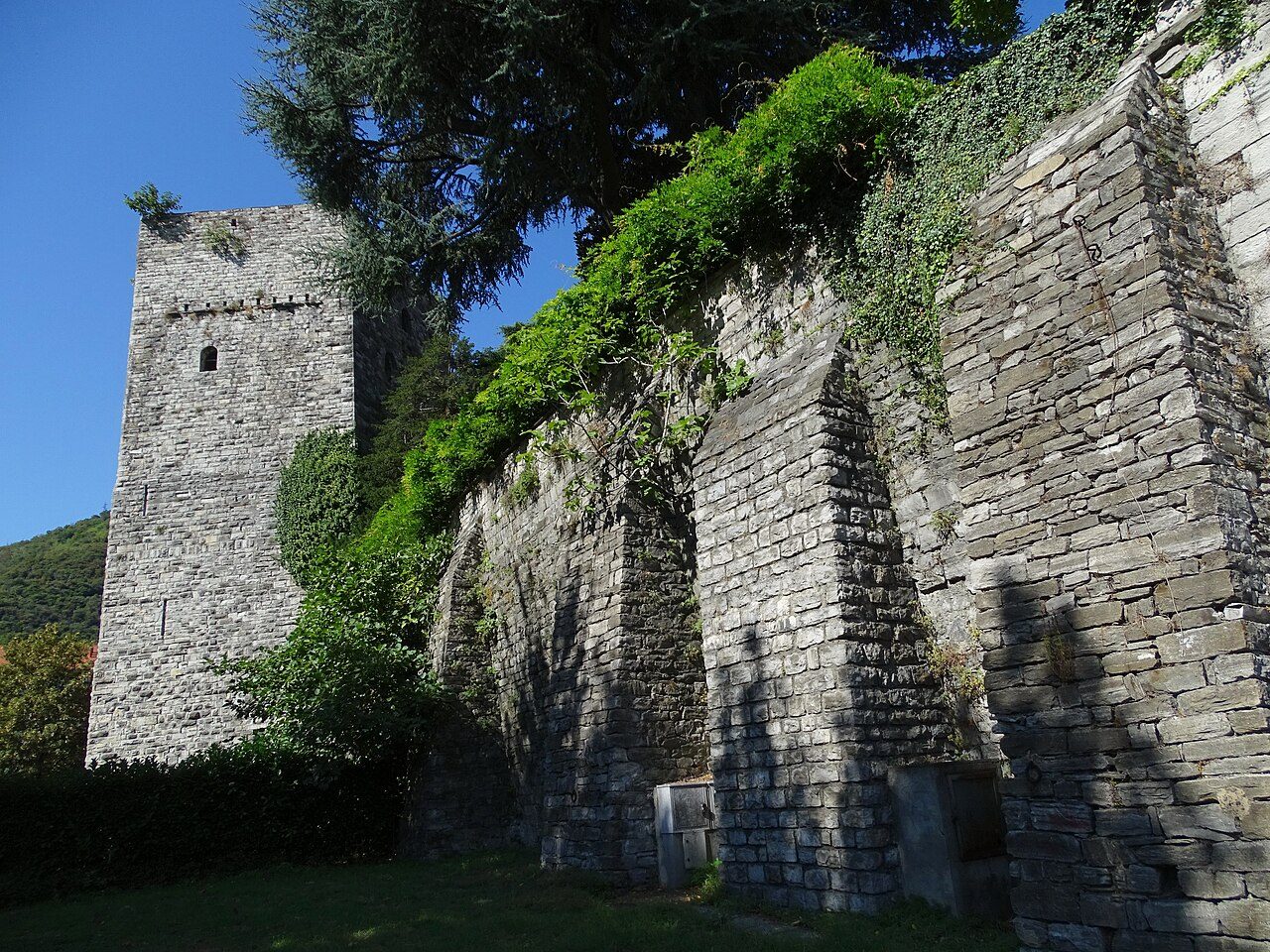
The south side is the only stretch of the medieval walls left intact. Where you are walking was the moat; on top, in place of the , gardens now spill over.
Spot the detail
Raise your eyes to the top of the wall: what is missing from a medieval city wall?
The full story
Walk slowly and keep your eyes on the wall. This is the best stretch of the whole circuit: from one corner tower to the other, the south side is the only one to have reached us intact. About half a kilometer of stone, a third of a mile, begun in 1158.
That year Frederick Barbarossa, the emperor at war with Milan, understood how much he needed a strong Como. He had the defenses the Milanese had torn down thirty years earlier rebuilt and strengthened. The new walls followed the Roman line but a little farther out. They were crowned with , with a moat in front.
Moat, battlements, and sentry walk
Now strip away in your mind everything that came later. The tree-lined avenue you are walking on is the moat: it was drained at the end of the eighteenth century and filled in a few decades later. Along the top ran the , the row of stone teeth the defenders sheltered behind: they were knocked down in the Napoleonic era. And where you now see trees and hedges poking out ran the sentry walk.
Sold and turned into gardens
The turning point is 1783. The walls no longer stopped any army, and the military treasury sold them to the city, which in turn handed stretches over to private owners. The families whose houses backed onto the walls took the sentry walk and made gardens of it.
The walls were left with one last, inglorious task: marking the customs line. Anyone coming in with goods paid at the gate. In the second half of the nineteenth century that ended too.
It was not the first time a piece of the walls had passed into private hands. In 983 the emperor Otto II had given a certain Bariberto a stretch of the walls of the day: twenty-five pertiche of wall, an old measure of length, three towers included.
Around the turn of the twentieth century more pieces of the circuit were demolished, and people argued for a long time over whether the walls deserved to stay. The question was settled in the 1970s, when the historic center was given over to pedestrians and the walls were left in peace.
A wall born to keep Milan out has ended up holding up gardens. Not a bad ending.
About this stop
Anecdote
Walls as a gift, walls for sale
More than once, Como's walls have been a deal between private parties. In 983 the emperor Otto II gave a stretch of them to a certain Bariberto: twenty-five pertiche of wall, an old measure of length, with three towers, near a small secondary gate. Eight centuries later, in 1783, the military treasury sold the entire circuit to the city, which passed several pieces on to the owners of the neighboring houses. That was when the sentry walks began turning into gardens.
The line is Roman: it goes back to the refounding of the city ordered by Julius Caesar. What you see today, though, is medieval. After the Milanese tore down the old walls in 1127, the people of Como allied themselves with the emperor Frederick Barbarossa, who from 1158 had the defenses rebuilt and strengthened. Porta Torre was completed in 1192. In the thirteenth and fourteenth centuries more gates, towers, and a castle on the east side were added.
Next stop
Keep going along the avenue to where the walls turn, at the corner with Viale Varese: the last tower is there