Stop 6 of 8
The dye works
Where to stand
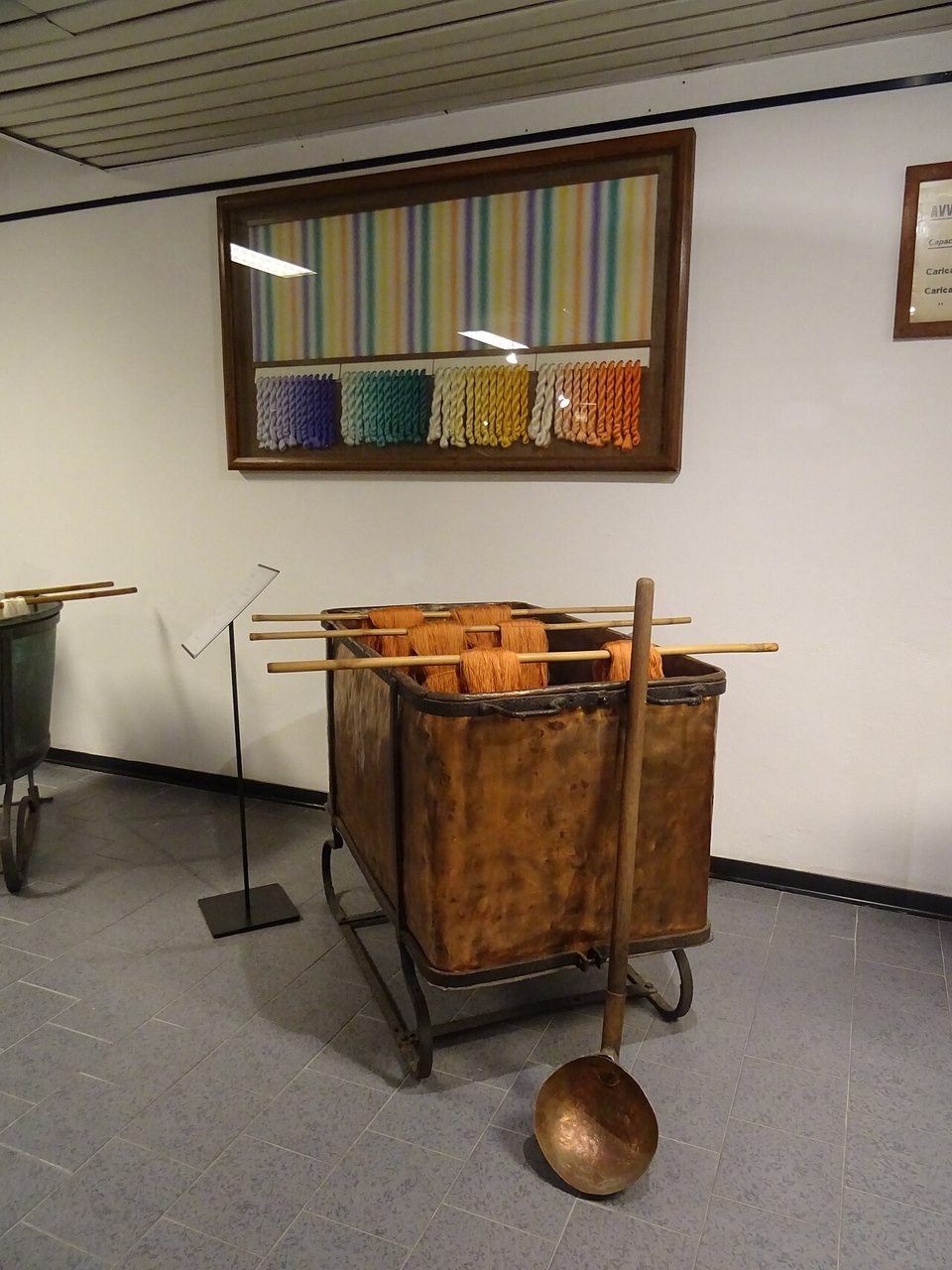
In front of the vats of the dye works, with the skeins hanging from wooden rods
First the thread's natural glue is washed away, then comes the dyeing: thread in the copper vat, cloth in the wooden one. A dye works like this, the Pessina, is where the museum began.
Spot the detail
The wooden rods resting on the vat, with skeins hanging from them: why aren't they fixed in place?
The full story
This is the part of the museum with the best claim to be here. The first machines in the collection came from a dye works, the Tintoria Pessina, founded in 1904 by Gaetano Pessina with the Pagani brothers.
When the firm headed toward closure in the early 1980s, that equipment was bound for the dump. The heirs chose to save it. That is how the museum began.
Before the color, degumming
What happened in a dye works? First of all, something was taken away. The thread arrives still coated in , the natural glue produced by the silkworm. Removing it makes the thread soft and shiny.
The operation is called and the recipe is disarmingly simple: hot water and Marseille soap, the kind made from soda and olive oil. Several baths, a rinse, a spin. Only now is silk the silk you know.
Two ways of dyeing
Then comes the dyeing, and there are two ways to do it. If the thread is dyed, the skeins are hung on wooden rods and lowered into the dye bath inside a copper vat, the pirola. If the woven cloth is dyed, the length is sewn end to end and lowered into the barca, a wooden vat, draped over an elliptical reel. It is not round for a practical reason: on a round reel the fabric would slip.
In both cases the secret is never to stop. The dyer turns it over and over, so the color takes evenly.
Where the leftover dye went
And the leftover dye? Here the museum tells the story without prettying it up. When the work was done, the contents of the pirola were tipped onto the floor and the liquid ran into the waterways beside the dye works, then into the Cosia stream, then into the lake. The water that had made the factories grow was the one that paid the bill.
Como has had some enormous dye works. The Ticosa, founded in the second half of the 1800s and closed in the early 1980s, has been described as the most important dyeing plant in Italy. The Pessina closed in 1985. Its legacy is what you see in front of you.
About this stop
Anecdote
Machines saved from the dump
The Museo della Seta, Como's silk museum, was born from a rescue. In the early 1980s the Tintoria Pessina, a dye works in business since 1904, is heading for closure and its machines are bound for the dump. Among the heirs another idea takes hold: keep them, to preserve the memory of silk work in Como. Right across the street stood the new buildings of the Setificio, the silk school. The first machines find a home there, today in the dyeing section, and around them forms the group that will open the museum in 1990. Since then, many closing firms have donated their materials.
In the lake, by way of the stream. The museum tells it without prettying it up: once the dyeing was done, the contents of the vat were tipped onto the floor and drained into the waterways beside the dye works, which flowed into the Cosia and from there into Lake Como. Water was the resource that had drawn textile firms to this district, because it powered the machines. For a long time it was also their drain.
Next stop
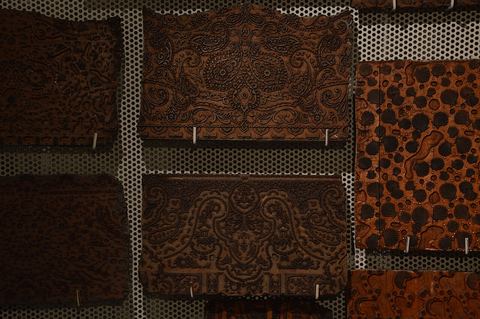
Continue toward the printing tables and the collection of carved wooden blocks