Stop 6 of 6
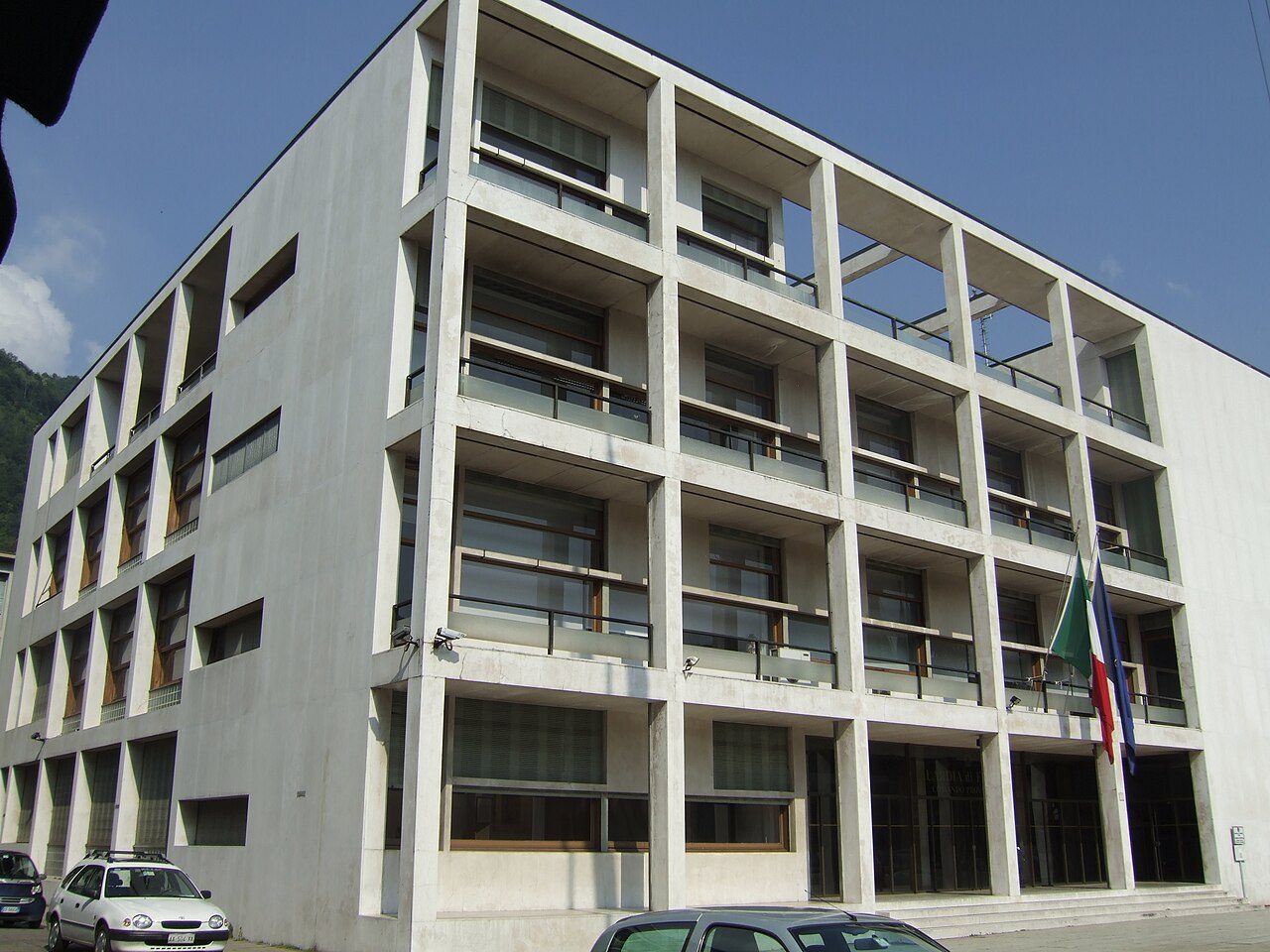
Via Pessina and the top floor
Where to stand
On Via Pessina, along the side of the building, a few steps back, looking up at the top floor
Up high the wall steps back and leaves an open . That floor came close to being raised, and the whole building to being auctioned off. It was saved above all by one stubborn critic.
Spot the detail
On the top floor, find the spot where the wall is set back from the grid
The full story
On this side the grid is easy to read. In the central the wooden window frames and the parapets leave beams and pillars in the foreground.
Then look up. On the top floor the wall steps back and forms an open inside the frame. That light, almost empty floor is the point where the building's story nearly took a different turn.
Terragni, the architect, saw nothing of what came afterward. He went off to war as an artillery captain, ended up on the Russian front and was sent home for health reasons. He died in Como in July 1943, at thirty-nine.
The building up for auction
At the Liberation the anti-Fascist parties occupied the Casa. The symbols vanished, Piazza dell'Impero became Piazza del Popolo, and for years the building was a kind of shared house for parties and associations. In 1956 the Italian state, which had become its owner, decided to sell it at auction to cover a debt. The fear was that a buyer might disfigure it, or tear it down.
The one who raised the alarm was Bruno Zevi, a critic and historian of architecture, in the pages of a magazine. It became a national affair. In October a first protection order arrived and the auction was withdrawn.
The following year the building was assigned to the Guardia di Finanza, Italy's financial police. A helping hand came from Attilio Terragni, the architect's brother, an engineer and in those years a senator. Under the regime he had been the podestà of Como, the appointed head of the city government.
The rejected extra story
It was not over. In 1968 a project called for raising the very top floor you are looking at, and it already had a first go-ahead from the Soprintendenza, the state heritage office. Zevi protested again, joined by many academics, and the added story was rejected. Full listing as a monument came only thirty years after the failed auction.
Zevi called it a milestone of modern European architecture. Today nobody would dream of touching it.
And in the protection documents it carries a name that tells you how things turned out: Casa Terragni, formerly Casa del Fascio. The party has passed. The architect has remained.
About this stop
Anecdote
One step from the auction block
In 1956 a notice announced the sale at auction of the former Casa del Fascio in Como, the Fascist party headquarters and the masterpiece of the architect Giuseppe Terragni, which had passed to the Italian state and was occupied by parties and associations. The fear was that a buyer might disfigure it or tear it down. The critic Bruno Zevi raised the alarm in the pages of an architecture magazine, and the matter became a national one. On October 10 a protection order arrived and the auction was withdrawn. Twelve years later Zevi protested again, this time against the plan to raise the top floor, and he won again.
Anecdote
Saved by copyright law
In 1956 the Italian state announced the auction of the former Casa del Fascio in Como, once the Fascist party headquarters and the masterpiece of the architect Giuseppe Terragni. The building was barely twenty years old. Too young: the monuments law protected only works over half a century old. To stop the sale, the copyright law was used, the same one that defends books, music and paintings. The order of October 10 recognized in the building an important artistic character. Terragni had been dead for thirteen years. Listing as a monument came in 1986, as soon as it turned fifty. For once, a building was defended like a novel.